China Just Banned Wealth-Flaunting Influencers — Millions of Followers Vanished Overnight. The Lesson For Every Creator: Own Your Audience Before The Platform Decides You Don't
This week, China's Cyberspace Administration (CAC) executed the largest single-week takedown of high-follower influencer accounts in the history of social media. Douyin (the Chinese TikTok) removed 4,701 posts and shut down 11 accounts in seven days. Xiaohongshu deleted 4,273 "illegal" posts and closed 383 accounts. Weibo removed over 1,100 pieces of content. Some of the deleted accounts had millions of followers built over half a decade.
Wang Hongquanxing — known as "China's Kim Kardashian" with 4.3 million Douyin followers — gone. Bo Gongzi, the Porsche-and-Hermès lifestyle creator — gone. Baoyu Jiajie, "Sister Abalone," — gone. The crackdown is the latest phase of the Qinglang ("Clear and Bright") campaign, expanded in 2026 with credential requirements for any creator posting on medicine, finance, education, or law. Platforms now face fines of up to 100,000 yuan ($14,000) per violation, which gives them direct incentive to delete first and review later.
For Western creators reading this thinking "that's a China problem," the diagnosis is wrong. The mechanism that destroyed millions of follower accounts in China overnight exists on every platform you use. The only difference is the trigger. Today it's wealth display in Beijing. Last month it was 600,000 Instagram accounts banned by Meta. Last quarter it was 12 million YouTube channels terminated. Two years from now it will be something else, somewhere else.
The lesson is the same in every case: if your audience exists only on a platform, your audience belongs to the platform. The day the platform decides — for any reason, with no appeal — your audience is gone.
What Actually Happened In China This Week
The CAC's enforcement of the wealth-flaunting ban is mechanical and final. There is no appeal process. There is no warning. The account is deleted. The followers are notified that the account no longer exists. The creator's monetization — affiliate commissions, sponsorship contracts, paid subscription revenue — vanishes.
The published trigger criteria from the May 2026 enforcement notice include:
- Displays of luxury goods, cars, jewelry, or watches above 50,000 yuan ($7,000)
- Showing access to elite spaces (private jets, exclusive clubs, government-restricted events)
- Posing with stacks of cash, bank statements, or transaction screenshots
- "Wealth comparison" content (mocking less-wealthy people, exaggerated lifestyle gaps)
- Lifestyle content that "creates social anxiety about economic inequality"
The criteria are deliberately broad. Enforcement is at the platform's discretion under threat of fine. Many creators who never explicitly intended to "flaunt wealth" — just posted normal lifestyle content featuring incidentally expensive items — have been swept into the takedown.
For the deleted creators with millions of followers, the actual loss is two-layered:
Layer 1: The audience. Five to ten years of audience building, gone in 24 hours. Followers cannot follow a deleted account. The relationship is severed by the platform.
Layer 2: The income. Sponsorship contracts terminated. Affiliate commissions cut off. Paid subscription revenue stopped. Brand deals canceled. For the top creators, this is millions of yuan in monthly revenue evaporating overnight.
There is no recovery path. The accounts are not coming back. The followers do not migrate. The income does not resume on a new account because the new account starts at zero.
Why This Matters Outside China
The instinct of every Western creator reading the China news is "that can't happen here." The instinct is wrong. The mechanism is identical. Only the trigger differs.
United States, 2025: Meta deleted 600,000+ Instagram accounts in a single quarter under the AI-generated-content enforcement wave. Many were legitimate human creators. No appeal in 78% of cases.
United States, 2025: YouTube terminated 12 million channels for "terms of service violations" — many for AI-generated content, copyright disputes, or misclassified spam.
United Kingdom, 2026: Ofcom enforcement of the Online Safety Act began removing accounts for "harmful content" — a category that has expanded faster than creators can adapt.
Australia, 2025: The 47 million account social media age verification ban took effect. Creators with audiences under 16 lost a meaningful percentage of their reach overnight.
India, 2026: The Digital Personal Data Protection Act enforcement removed creator accounts for data handling violations many creators did not know they were subject to.
In every case, the platform held the audience. The platform made the decision. The creator had no recourse.
The China case is the cleanest illustration because the trigger is so explicit. But the mechanism — platform owns audience, platform decides without appeal, creator income evaporates — is universal in 2026.
What The Deleted Creators Wish They Had Done
Conversations with creators who survived past platform takedowns (across China, US, UK, India) converge on one consistent answer: the only thing that matters is whether you captured your audience to a system you control before the takedown happened.
A creator with 4 million Instagram followers and zero captured emails has, after a takedown, an audience of zero. The followers cannot be contacted. The relationships cannot be transferred. The income cannot resume.
A creator with 4 million Instagram followers and 80,000 captured emails has, after a takedown, an audience of 80,000. The relationships continue via inbox. The newsletter sends arrive. Sponsorship revenue can resume on the new platform within 30 days because the creator can demonstrate verified audience ownership.
The difference between these two creators on the day before the takedown looks identical. Both have 4 million followers. Both look healthy on the platform. The difference shows up only after the takedown — when one keeps a viable business and the other loses everything.
The Math Of Survival
Run the numbers conservatively for an Instagram creator with 1 million followers and average engagement, monetizing through sponsorship, affiliate, and product income at $35,000/month.
Scenario A: No email capture mechanism in place.
- Day 1 of platform takedown: $0 audience, $0 monthly income going forward.
- 30 days post-takedown: trying to rebuild from a new account, $400-1,200/month income from organic growth.
- 12 months post-takedown: maybe back to $4,000-8,000/month if growth is exceptional. Career trajectory permanently damaged.
Scenario B: Email capture mechanism installed for the past 18 months.
- Captured emails over 18 months at industry-standard rate: 80,000-180,000 verified subscribers.
- Day 1 of platform takedown: full audience reachable via email. Open rate 38-52%.
- 30 days post-takedown: continued sponsor revenue at 60-80% of pre-takedown level via email. New platform rebuild begins from a position of strength.
- 12 months post-takedown: total revenue 90-110% of pre-takedown level. Audience asset largely intact.
The cost of installing the capture mechanism is zero (free up to 1,000 leads, $9/month after). The cost of not installing it is the entire business, on the day the platform decides.
How Capture Actually Works
The mechanism is simple and proven. The bio link on Instagram, TikTok, YouTube, and any other platform stops being a Linktree (which captures 0% of visitors as emails) and becomes a one-page capture gate that runs every visitor through Google Login or WhatsApp OTP verification before showing them the destinations they came for.
The visitor experience: tap bio link, sign in with Google in one tap (literally one tap, because most users are already signed into Google on their phone), arrive at the destinations. The creator experience: every bio link visitor becomes a verified email in a database the creator owns.
The conversion math:
- Standard Linktree: 0% of bio link visitors become emails
- Pop-up email form: 2-5% conversion
- Google Login gate (LeadMyBio): 18-22% conversion
For a creator with 200,000 monthly bio link visitors (typical for a 1M-follower account), the difference is 0 emails per month versus 36,000-44,000 emails per month. Over 18 months, that is the difference between owning your audience and renting it.
The platform decides who exists. Capture begins the day you set this up. leadmy.bio/login — free up to 1,000 leads, no credit card. The China creators who built capture mechanisms before the May 2026 takedown still have careers. The ones who didn't, don't.
Why WhatsApp Matters As Much As Email
In every major market — China, India, Brazil, Mexico, Argentina, Spain, the UK, increasingly the US — WhatsApp open rates run 88 to 96%, versus 22 to 38% for email. For a creator who survives a platform takedown and needs to immediately monetize their captured audience, WhatsApp is the channel that delivers conversion within hours instead of days.
LeadMyBio captures WhatsApp via OTP verification: the visitor enters their WhatsApp number, receives a one-time code via SMS, enters it, and the number is added to the creator's database as a verified contact. No fake numbers. No second accounts. No spam.
A creator who survives an Instagram or Douyin takedown with 30,000 verified WhatsApp numbers can broadcast to that list and have 25,000+ people open the message within four hours. The audience continues. The income continues. The new platform rebuild starts from a position of audience ownership rather than zero.
This is the difference between losing leads when content goes viral and turning every viral moment into a permanent asset that survives platform takedowns.
What The Top 1% Of Creators Are Doing In Response
The Western creators paying attention to the China takedown — the ones who recognize the mechanism rather than dismissing it as a foreign-government issue — are doing three things in May 2026:
Auditing their platform exposure. What percentage of their monthly revenue depends on a single platform? For most established creators, the honest answer is 80-95%. That is a single point of failure. The fix is to capture audience to a system the creator owns, then route content through email/WhatsApp as the primary channel and platform as the discovery channel.
Installing capture mechanisms across all platforms. Bio link on Instagram, link in description on YouTube, link in TikTok bio, link in X/Twitter profile, link in LinkedIn — all routed through a single capture page that turns every platform visitor into a captured email/WhatsApp contact.
Sending weekly content to the captured list. A captured list that is not communicated with degrades. Weekly send establishes the channel as the primary, not the platform. By the time a takedown happens, the audience is already trained to receive the creator on the captured channel.
The top 1% of creators who do all three are in a structurally different risk position than the 99% who don't. The China takedown is just the latest reminder that the difference matters.
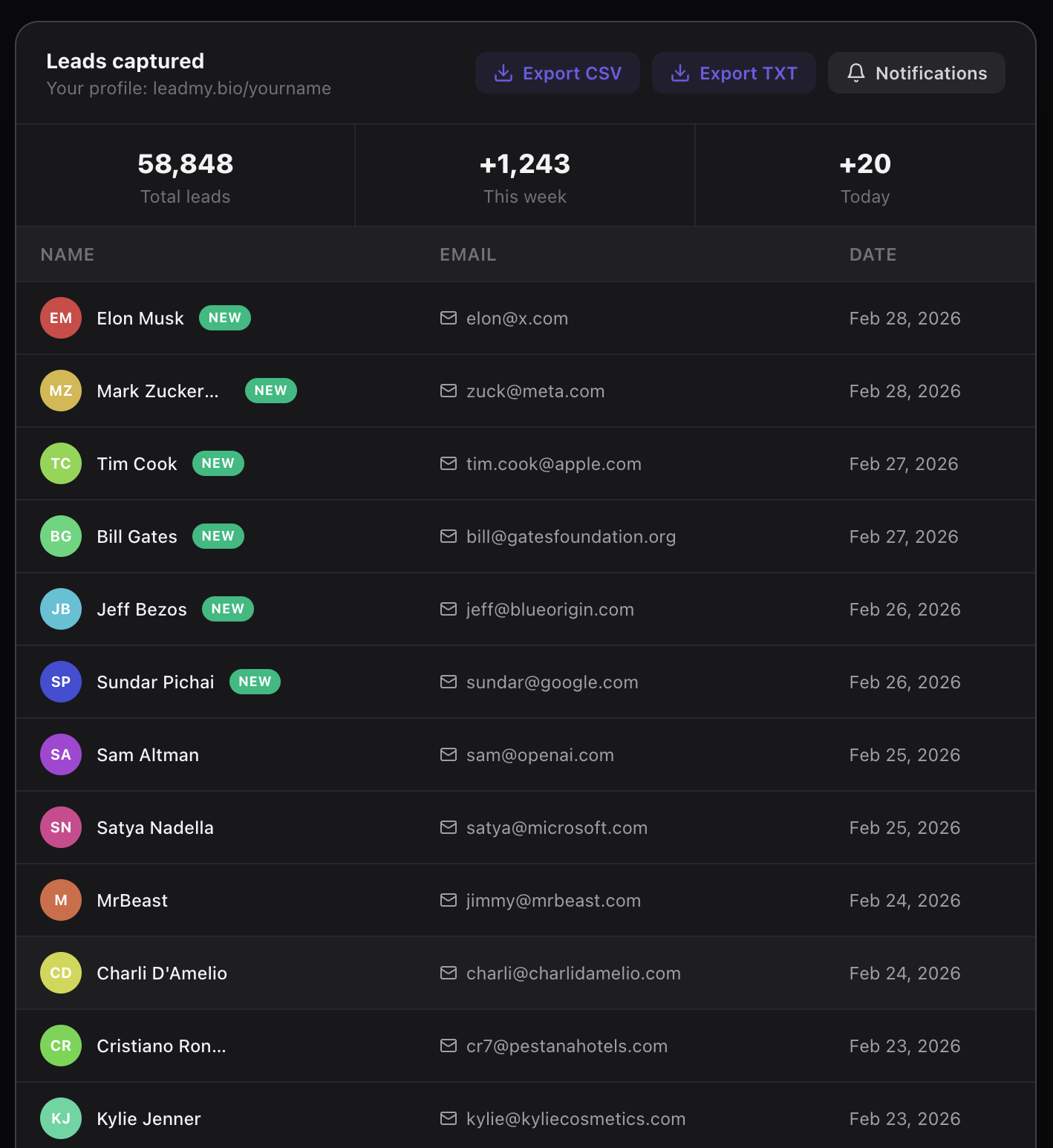
What Brand Deals Look Like After A Takedown
A creator who survives a takedown with a captured email list of 50,000 verified subscribers has a different sponsorship pitch than a creator rebuilding on a new account from zero.
The pitch from the captured-list creator: "I have 50,000 verified email subscribers in [niche]. Open rate 42%. Click rate 12%. I can guarantee 2,500 visits to your link in 24 hours via dedicated email send. Cost: $4,500."
The pitch from the rebuilding creator: "I'm rebuilding after a platform takedown. I have 8,000 followers on my new account. Engagement is 4%. I can post about your product." Brand response: "We'll get back to you."
Brands stopped paying for follower count — they pay for verified, segmented audiences. The creator with the captured list has the verified audience. The creator without doesn't, regardless of what their previous follower count was before the takedown.
What To Do This Week
The setup is fast. The cost is zero. The downside of not doing it is the entire business on a day the platform decides.
- Create a free account at leadmy.bio/login. 90 seconds.
- Build a one-page bio link with your strongest lead magnet, your latest content, and one CTA.
- Replace the bio link on Instagram, TikTok, YouTube, X, LinkedIn, and any other platform you use with the LeadMyBio URL.
- Send a single email to the captured list each week — establishes the channel as primary.
- Re-route every viral moment, every brand deal, every content drop through the capture page.
Free plan covers 1,000 leads. For most creators with established audiences, that fills in the first 30-60 days. After that, $9/month covers the next phase.
Compared to the cost of platform takedown — which is the entire business — this is the cheapest insurance available in the creator economy.
What The China Takedown Tells Us About 2026 And Beyond
The CAC's wealth-flaunting ban is one of dozens of platform-takedown mechanisms active globally in 2026. The list as of May:
- China: wealth display, sensitive topics, credential requirements
- US: AI-generated content enforcement (Meta, YouTube)
- UK: Online Safety Act harmful content removal
- Australia: under-16 audience verification
- India: data handling violations under DPDP Act
- EU: Digital Services Act content moderation
Every quarter brings new triggers. Every quarter sweeps in creators who did nothing wrong by their previous understanding of the rules. The only structural protection is to own your audience before the next sweep.
The China creators who lost millions of followers this week were not stupid, not lazy, not unsuccessful. Many were among the most followed and best-paid creators on Chinese social media. The thing they did wrong was assuming their platform relationship was permanent. It wasn't. It never is.
Don't be the next deleted account that wishes they had captured the list. Set up the capture mechanism today at leadmy.bio/login. Free up to 1,000 leads. The China takedown will not be the last. It might be the next platform you depend on.
FAQ
I'm not a wealth-flaunting creator. Does the China takedown affect me? The specific trigger doesn't, but the mechanism does. Every major platform globally has authority to delete accounts for terms-of-service violations, with no appeal in most cases. The triggers change over time and across jurisdictions. The structural risk is identical regardless of niche.
Will Western platforms really do mass takedowns? They already are. Meta deleted 600,000+ Instagram accounts in a single quarter in 2025. YouTube terminated 12 million channels in 2025. The scale of takedowns has increased every year for the past four years. The trend is not reversing.
What about TikTok specifically given US regulatory uncertainty? TikTok creators in the US face two layered risks: terms-of-service takedowns (which can happen any day) and regulatory removal of the platform entirely (which has been threatened multiple times). Either scenario destroys creator audiences that were not captured to a system the creator owns. The defense is the same.
How fast can I set up capture? Account creation: 90 seconds. Bio link page setup: 5 minutes. Replacing the link across all platforms: 10 minutes. Total: under 20 minutes for a creator who has not done this before.
What does this cost? Free up to 1,000 leads. $9/month after. Compared to the cost of losing your audience to a platform takedown — typically the entire business — the math is decisive.
China just gave the creator economy the clearest demonstration of platform risk in five years. Wang Hongquanxing's 4.3 million followers are gone. The platform decided. The creator had no recourse. The only audiences that survive scenarios like this are the ones captured to a system the creator owns. Set up that system today, before the next platform decides you don't exist.
Sources:
- China is banning wealth-flaunting behavior on social media — NBC News
- China's Influencer Ban Deleted 4,701 Posts Overnight — Hindustan Herald
- China cracks down on wealth-flaunting social media — The Conversation
- Chinese Influencers Banned Amid Money Worship Clampdown — Sixth Tone
- China is going after fake expert influencers — Fortune
Ready to start capturing real leads?
Set up your LeadMyBio profile in 5 minutes. Free forever up to 1,000 leads.
Create your free profile →