Why Brands Are Replacing Influencers With Their Own Employees (And What To Do)
You might not know the name yet, but you've probably seen the pattern. An employee at a retail store starts posting casual, behind-the-scenes content from their job. Their personality comes through. The content is genuine. People follow.
The "Staples Baddie" — a Staples employee who goes by @blivxx — built 491,000 followers doing exactly this, without ever being formally paid as a creator. And here's the part that matters: they measurably drove store traffic. Not just engagement. Actual foot traffic.
Brands noticed.
In 2026, Employee-Generated Content (EGC) — content created by employees rather than paid influencers — is one of the most significant shifts happening in influencer marketing. It's not replacing the entire creator economy. But it is reshaping the brand deal landscape in ways every independent creator needs to understand.
What Employee-Generated Content Actually Is
EGC is exactly what it sounds like: content about a brand created by people who work there. What's new in 2026 is that brands have stopped treating this as a happy accident and started building structured programs around it.
Urban Outfitters, American Eagle, and Sephora now run organized communities where in-store employees earn commissions and perks for consistent content creation rather than single sponsored posts. These aren't influencer campaigns. They're internal ambassador programs.
The economics are straightforward. An employee creator typically has authentic connection to the brand's actual products and culture. The content reads as genuine rather than scripted. And the cost is a fraction of what a professional influencer charges for the same reach.
For certain types of brands — particularly retail, hospitality, and lifestyle companies — EGC outperforms paid influencer content on key metrics. Engagement rates are higher. Trust signals are stronger. Conversion rates on purchase intent are better.
The Specific Brand Deals at Risk
It's worth being precise about which end of the creator market EGC threatens most.
High risk:
- Mid-tier product promotion for retail and lifestyle brands
- Campaigns focused on "authenticity" and "real people" messaging
- Brand deals where the brief is essentially "post this product in your daily life"
- Awareness campaigns for brands with large employee workforces
Lower risk:
- Niche expertise content where being an outsider is the point
- Highly personal or vulnerable content that requires genuine audience relationship
- B2B and professional service content where independent authority matters
- Creators with specific subcultures or communities that employees can't authentically represent
The pattern here echoes the AI influencer threat: the more generic the content brief, the more substitutable the creator. The more your value is your specific perspective, community, and direct relationship with your audience, the harder you are to replace.
The Underlying Trend That Both Threats Share
Employee-Generated Content and AI influencers look different on the surface. One is humans replacing humans. The other is AI replacing humans. But they're driven by the same underlying force: brands are looking for ways to reduce their dependence on independent creators while maintaining authentic-feeling content at scale.
What this means practically is that the negotiating power of the middle tier of the creator market — accounts with 50,000 to 500,000 followers who do primarily product-focused content — is under pressure from both sides simultaneously.
This is not the end of the creator economy. It's a restructuring. The creators who thrive through this restructuring are the ones who have built something that neither an employee nor an AI can replicate: a genuine direct relationship with a specific audience.
And a direct relationship, in 2026, means an email list.
What the Smart Creators Are Building Instead
The response to EGC — and to the broader commoditization of influencer marketing — isn't to compete on the terms that favor employees and AI. It's to double down on what they can't replicate.
Deeper audience relationships. An employee posting from the Sephora floor has brand authenticity. They don't have five years of content, inside jokes, personal revelations, and community-specific references that make your audience specifically loyal to you. That depth of relationship is built over time and can't be manufactured.
Owned revenue streams. Creators who derive meaningful revenue from their own products, communities, and services are structurally less dependent on brand deals. A paid newsletter with 2,000 subscribers generating $10,000/month doesn't require any brand to choose you. It runs whether brand marketing budgets are up or down.
Direct audience access. This is the most actionable item. Your followers on social platforms are not your audience in any meaningful sense — you can't reach them without the platform's permission. Your email list is your audience. Direct, unmediated, algorithm-independent access to people who want to hear from you.
The List Is the Asset
Here's the concrete situation: if your brand deal income decreased by 30% tomorrow because a brand shifted to an EGC program or AI-generated content, what would you do?
If you have an email list of 5,000–10,000 verified subscribers, you have options. You can launch a product. You can sell a course. You can open a membership. You can partner with brands who specifically value email list reach over social reach (an increasingly common preference). You can pitch your email open rate against their EGC engagement numbers and often win on ROI.
If you don't have an email list, you have a social media presence that someone else controls, and fewer options than you thought.
The EGC wave is one more piece of evidence for a conclusion that's been building in the creator economy for several years: social media following is renting, and email list is owning. The creators who understand the difference and act on it in 2026 will navigate these market shifts more gracefully than the ones who don't.
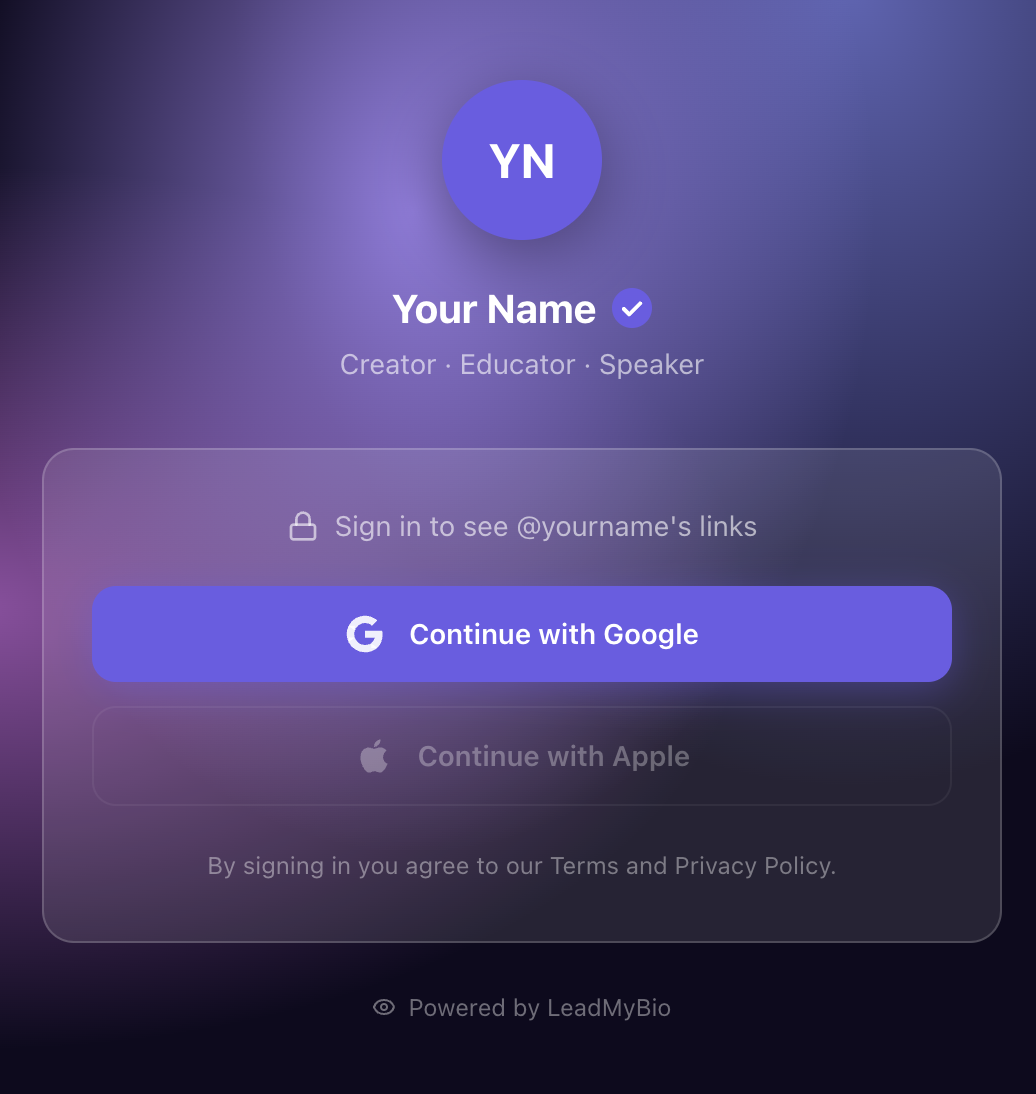
Your bio link is the starting point. Every post you create drives traffic to your profile. Convert that traffic into email subscribers — one tap, no form, no friction — and you're building the asset that neither an employee posting from the floor nor an AI persona can touch.
Stop renting your audience. Set up LeadMyBio in 5 minutes and start converting bio link visitors into verified email subscribers. Free forever up to 1,000 leads. No credit card. Create your free profile →
Ready to start capturing real leads?
Set up your LeadMyBio profile in 5 minutes. Free forever up to 1,000 leads.
Create your free profile →