How Much Do Instagram Influencers Make in 2026? The Real Numbers
You've seen the headlines. "$10,000 per post." "This influencer makes $500k a year." "How she turned 50k followers into a full-time income."
Those numbers are real. They're also outliers, estimates, or so stripped of context that they're effectively useless if you're trying to understand what Instagram creators actually earn.
The reality is messier — and in many ways more interesting. Follower count is one of the weakest predictors of income. Two creators with identical audience sizes can have a 10x income gap. A micro-influencer with 40,000 followers can earn more than a macro with 800,000. And the metric that actually determines long-term creator income has nothing to do with anything Instagram measures natively.
Here's what the data actually shows in 2026.
Income by Follower Tier: The Realistic Ranges
These figures reflect sponsored post income specifically — the most commonly cited number, and the most commonly misunderstood one.
| Tier | Follower Range | Sponsored Post (per post) | Monthly Sponsored Income (estimate) |
|---|---|---|---|
| Nano | 1k – 10k | $10 – $500 | $0 – $500 |
| Micro | 10k – 100k | $100 – $2,500 | $500 – $5,000 |
| Macro | 100k – 1M | $1,000 – $20,000 | $5,000 – $50,000 |
| Mega | 1M+ | $10,000 – $250,000+ | $20,000 – $500,000+ |
A few things to notice immediately.
The ranges are enormous at every tier. A micro-influencer's monthly sponsored income could be $500 or $5,000. That's a 10x gap at the same follower count. The tier tells you almost nothing on its own.
Nano influencers often earn $0 in sponsored income entirely — not because they can't, but because most brands don't bother reaching out at that scale, and most nano creators don't know how to pitch themselves. Their upside is in products and affiliate income, not brand deals.
The mega-tier ceiling is real but applies to perhaps a few hundred creators globally. The median creator with 1M+ followers earns far less than $500k/month in sponsored income.
Why These Numbers Are Misleading
Organic reach is now 5.2%
Instagram's average organic reach in 2026 sits around 5.2% of followers per post. That means a creator with 100,000 followers reaches roughly 5,200 people with a typical post. When a brand pays for a sponsored post, they're not reaching 100,000 people — they're reaching somewhere between 3,000 and 10,000, depending on content format and algorithm timing.
This is why brands have increasingly moved toward CPM-based pricing (cost per thousand impressions) rather than flat follower-based rates. A creator with 100k followers and 8% engagement is worth significantly more than one with 100k followers and 1.2% engagement — but both may quote similar rates based on vanity metrics.
Niche creates a 10x income gap
The biggest income variable most income guides gloss over is niche. A business and finance creator with 50,000 followers can charge 3–5x more per post than a general lifestyle creator with 200,000. A personal finance creator with a proven, engaged audience can outcharge a beauty creator at twice the following.
Here's a rough niche multiplier for sponsored post CPM:
| Niche | Relative CPM |
|---|---|
| Finance / Investing | Very High |
| B2B / SaaS | Very High |
| Legal / Health (professional) | High |
| Fitness / Wellness | Medium-High |
| Food / Recipe | Medium |
| Lifestyle / General | Low-Medium |
| Entertainment / Memes | Low |
Finance creators often command $50–$100 CPM. General entertainment creators may see $5–$15. Same platform, same follower count, 5–10x different income.
What Actually Determines Influencer Income
1. Monetization model
This is the biggest lever, and it's entirely within the creator's control. Sponsored posts are the most visible monetization method but rarely the most profitable — especially below the macro tier.
| Monetization Model | Typical Monthly Range (Micro Creator, 50k followers) | Notes |
|---|---|---|
| Sponsored posts only | $500 – $3,000 | Dependent on brand outreach; inconsistent |
| Affiliate marketing | $200 – $2,000 | Passive, scales with trust; low ceiling without volume |
| Digital products (courses, presets, templates) | $1,000 – $15,000 | High margin; requires upfront creation |
| Coaching / consulting | $2,000 – $20,000 | High ticket; not scalable past a point |
| Paid subscriptions (Close Friends, Patreon) | $500 – $5,000 | Predictable; requires active community |
| Combination (products + sponsored) | $3,000 – $30,000+ | Most resilient; reduces platform dependency |
The data is consistent: creators who sell their own products — digital or physical — earn more than those who depend entirely on brand deals at every follower tier except the very top.
2. Audience quality over audience size
A follower is not a lead. A follower is an anonymous number. You don't know their name, email, or purchase intent. You can't reach them if Instagram changes its algorithm, suspends your account, or throttles your reach.
An email subscriber is a verified person who explicitly opted in to hear from you. They gave you permission. You can contact them directly, outside of any platform.
This distinction is not philosophical — it has direct income implications.
3. Real engagement rate
Engagement rate (likes + comments + saves divided by reach, not followers) is how sophisticated brands evaluate creators. A 5–8% engagement rate on a 50k account is genuinely valuable. A 0.8% rate on a 500k account is not.
The Math That Explains the Gap
Consider two creators:
Creator A: 200,000 followers, 1.5% engagement rate, no email list, sponsored posts only. Monthly income: $4,000–$8,000, inconsistent.
Creator B: 45,000 followers, 6.2% engagement rate, 8,000 verified email subscribers, sells a $197 digital product. Monthly income: $8,000–$18,000, more consistent.
Creator B earns more with less than a quarter the following. Here's the math:
- Email list: 8,000 subscribers
- Average open rate: 38%
- People who see each email: ~3,040
- Conversion rate on product launch: 2.5%
- Sales per launch: ~76
- Revenue per launch: 76 × $197 = $14,972
- Launches per month: 0.5–1 (bi-monthly or monthly)
That's before any sponsored posts, affiliates, or other income streams. Creator B's email list alone generates more than Creator A's entire sponsored income — with a fraction of the followers.
How Email List Size Multiplies Earnings at Every Tier
The formula that actually predicts sustainable creator income is simple:
Email list size × open rate × conversion rate × product price = revenue
Follower count doesn't appear anywhere in that formula.
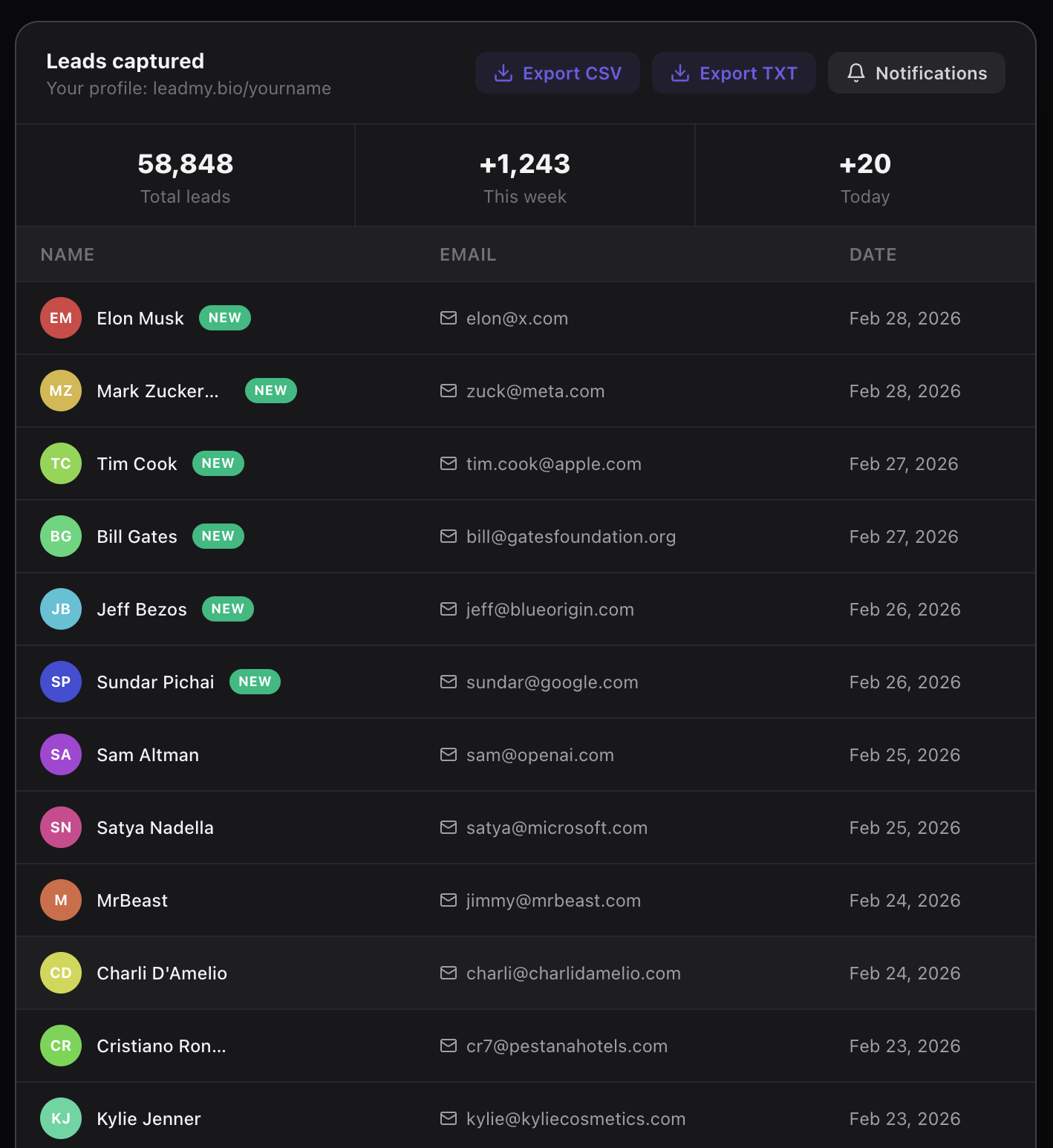
Here's how this plays out across follower tiers when a creator adds a growing email list:
| Follower Tier | Without Email List | With 5,000 Email Subscribers | With 20,000 Email Subscribers |
|---|---|---|---|
| Nano (5k) | $0 – $300/mo | $1,000 – $5,000/mo | $5,000 – $20,000/mo |
| Micro (40k) | $500 – $3,000/mo | $3,000 – $12,000/mo | $12,000 – $40,000/mo |
| Macro (300k) | $8,000 – $25,000/mo | $15,000 – $50,000/mo | $40,000 – $100,000/mo |
The email list doesn't replace sponsored income — it stacks on top of it and makes it less necessary. When you own a direct line to your audience, you negotiate from a position of strength. Brand deals become optional, not lifelines.
The Metric That Actually Predicts Income
Stop obsessing over follower count. Here is the metric stack that correlates with actual creator income, ranked from most to least predictive:
- Email list size × engagement — The single best predictor of sustainable income
- Niche CPM value — Determines what each engaged viewer is worth to brands
- Monetization model diversification — More streams = less volatility
- Real engagement rate — Determines product launch conversions and brand deal rates
- Follower count — Useful for context; almost meaningless without the above
The creators consistently earning above average for their tier share one trait: they treat their email list as a primary asset, not an afterthought.
How to Build the Asset That Actually Matters
Most creators lose a significant percentage of their traffic at the bio link. Someone sees a Reel, clicks the bio, sees a Linktree with ten links — and leaves. No email captured. That person is gone.
The fix is a link-in-bio that converts visitors into verified email subscribers, not just clicks into a menu.
LeadMyBio does exactly that. When someone visits your LeadMyBio profile and clicks to follow or sign up, they authenticate via Google — which means you get their verified, real email address. No fake submissions. No typos. No throwaway addresses.
The conversion rate is 15–20%, compared to 1–3% for a traditional email capture form. Every 100 people who visit your bio, 15–20 become verified leads you own permanently.
That's the asset. That's the number that compounds.
A creator who starts building this list at 10,000 followers and reaches 50,000 in 18 months doesn't just have more followers — they have a growing, owned asset that doesn't disappear if Instagram updates its algorithm next Tuesday.
The followers you have on Instagram are Instagram's data. The email list you build is yours.
Ready to stop renting your audience? Set up your LeadMyBio profile in 2 minutes. Free forever up to 1,000 leads. No credit card required. Create your free profile →
Ready to start capturing real leads?
Set up your LeadMyBio profile in 5 minutes. Free forever up to 1,000 leads.
Create your free profile →