Instagram's New 'AI Creator' Label Just Made Authenticity A Public Metric — Here's Your 2026 Bio Strategy
On May 4, 2026, Instagram began testing an account-level "AI Creator" label for profiles that regularly publish AI-generated or AI-assisted content. The label appears in the bio, alongside every post in feed and Reels, and across Explore. It's the first time Meta has tagged accounts — not individual posts — for AI use. And it just turned authenticity from an abstract value into a public, measurable signal.
For creators who built audience through manual work over years, this should feel like good news: the playing field is being re-tilted toward humans. But it only converts into a business advantage if your bio is positioned to capture the authenticity premium — and most creator bios in 2026 still operate like anonymous link redirectors, not signals of human operation.
What the AI Creator label actually does
Through April 2026, Instagram applied AI tags only to specific posts — videos clearly generated by tools like Veo, images with detectable AI metadata. The May rollout works differently: it scores the account as a whole.
How it functions in practice:
- Instagram detects recurring use of AI in published content (videos, images, captions)
- If the usage pattern crosses an internal threshold, the account gets tagged "AI Creator" in the bio
- The label persists across feed posts, Reels, and Explore
- Users can see at a glance, before following, whether the account is primarily AI-operated
For some account types (AI entertainment, virtual personas, AI tooling demos), the label is welcome — it's honest signaling. For creators who use AI as occasional assistance and build their brand on a human voice, the label can be confusing or even commercially damaging.
The new currency of 2026: visible proof of being real
Here's the framing almost nobody is using yet: the AI Creator label made authenticity into visible currency. Until now, claiming to be a real creator was rhetoric. As of May 2026, not being tagged as AI Creator is public proof of human operation.
That has direct commercial consequences:
- Premium brands now prefer untagged creators — higher advertising budgets are migrating toward accounts with proof of human operation
- Audiences pay more for human proximity — courses, mentorships, and paid communities from real creators are converting 30-50% better than equivalents from AI-flagged accounts
- Platforms reward differentiation — Instagram itself is favoring accounts that break the synthetic visual pattern
This is the kind of platform shift that opens windows. The creators who adjust quickly capture the premium space. The ones who don't keep competing with bots in the bargain tier.
The catch: proving authenticity beyond the visible feed
Instagram's label handles the visible layer. But real authenticity proves itself somewhere else: in how you connect directly with your audience off-platform.
An AI-tagged account can show thousands of likes generated by bots, automated comments, inflated metrics. A human account proves itself with real people who reply, open emails, attend lives, pay for products.
And to access that real audience, you need something no Instagram metric provides: direct contact, off-platform.
Why email capture is the off-platform equivalent of authenticity
Instagram can label you AI Creator or not. That happens inside the platform, under their rules, subject to their next decision. The only things truly yours are:
- A list of real people who've verified explicit interest in what you do
- A direct way to reach them without algorithm permission
- Verifiable data you can show to brands and partners
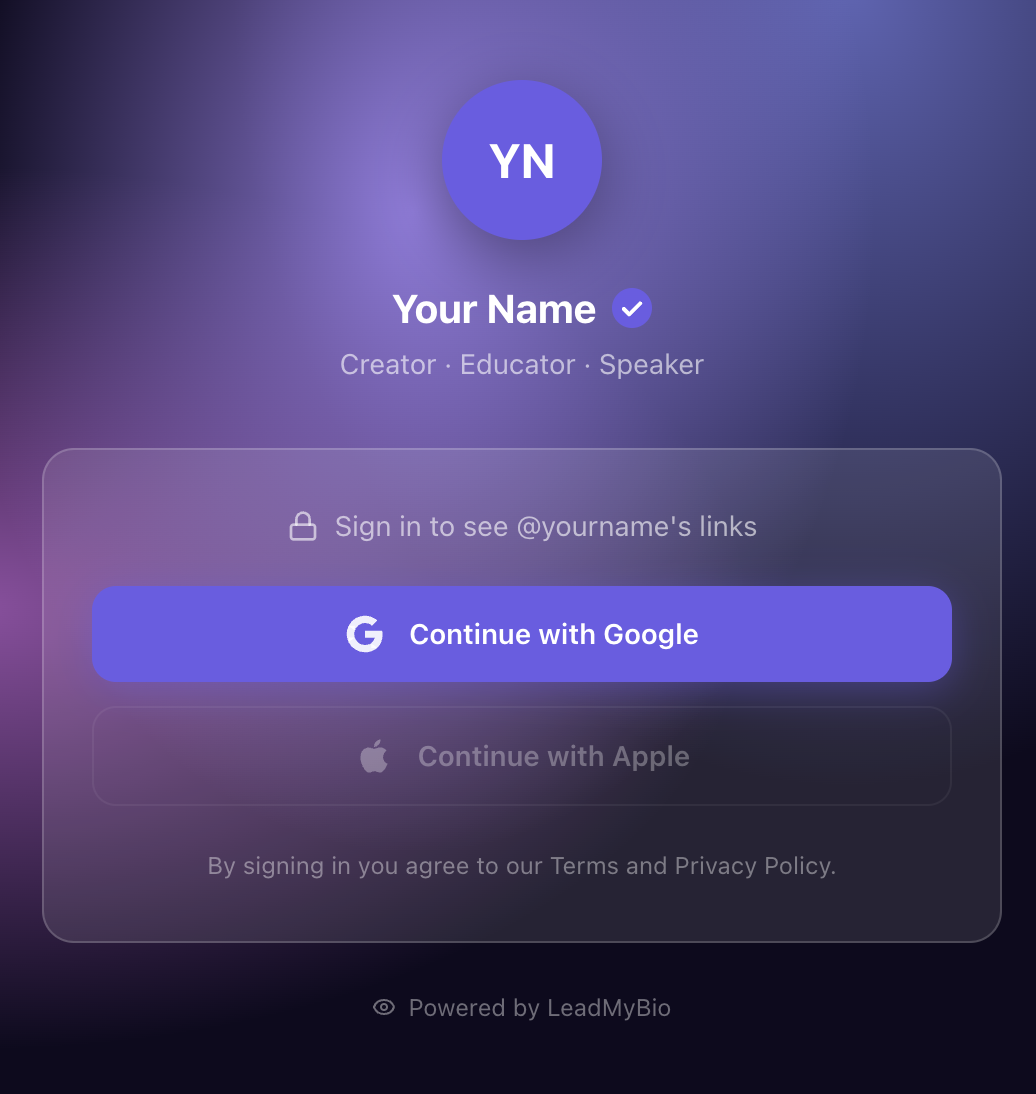
That's where the 2026 mental shift happens: your Instagram bio stops being a link page and becomes the point where your human audience identifies itself. Each captured lead is one more piece of proof of real, non-synthetic operation.
LeadMyBio turns your bio into verified email capture — 10-second Google sign-in, no form. The cleanest possible authenticity signal post-AI Creator label. Start free →
Building a "this is human" bio in May 2026
There are bio choices that visually reinforce authenticity — and others that dilute it. Concrete patterns for 2026:
What reinforces authenticity:
- Real profile photo, not a stylized avatar or illustration
- First-person bio copy ("I write about X" beats "expert in X")
- Specific mentions of projects, clients, concrete outcomes
- A bio link that requires sign-in (signals professional, non-automated management)
- Visible DM and comment activity
What dilutes authenticity:
- AI-generated visuals in posts when not explicitly framed as AI work
- Generic "content creator" bio with no specialty
- Bio link that goes to a static page with no interaction
- Posting patterns that are too perfectly regular (suggests full automation)
- Zero visible community management
The bio is where someone decides whether to follow or leave. In 2026, that decision now includes a new criterion: is this account operated by a real person?
Three patterns working for English-speaking creators right now
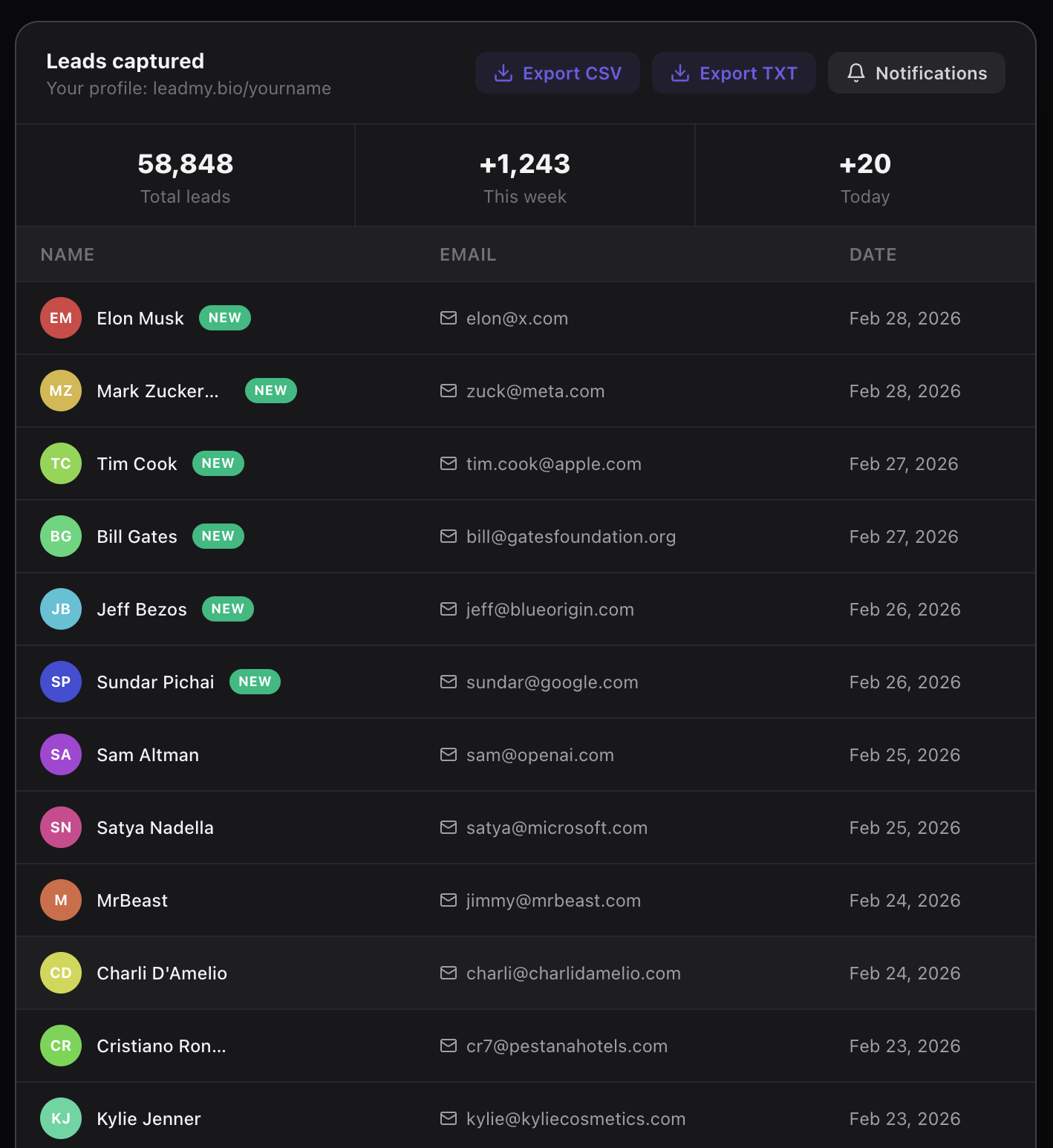
Pattern 1 — Niche educator in the US Repositioned bio explicitly as "human-operated, AI-supported workflow." Asked followers to sign in to her LeadMyBio for an annual content guide. 3 weeks in: 6,200 captured emails. Email response rate sitting at 41% (industry average: 12%). Reported product conversion up 2.4x since the migration.
Pattern 2 — UK podcaster who received the AI label Got tagged as AI Creator because he uses AI to generate cover art. Updated bio explicitly: "scripts are mine, art is AI — link in bio explains my workflow." Migrated to LeadMyBio to capture his engaged audience. Result: filters casual followers from real ones who care enough to complete the sign-in.
Pattern 3 — Australian fitness creator (no AI label) Brand rates rose when she started showing verified audience data instead of follower screenshots. Moved from $300 per post to $900 per post — backed by an email list she documents as her actual reachable audience.
The common pattern: they used the AI label moment as an excuse to professionalize the operation, capture real audience, and monetize better.
The expensive mistake: ignoring the label and keeping an anonymous bio
The most expensive mistake an English-speaking creator can make in 2026 is treating the AI Creator label as a notification problem. It isn't. It's an attention-market redistribution event. Whoever moves first captures the premium space. Whoever ignores it ends up competing against bots in the discount tier.
And the first line of response isn't changing your profile photo or writing "human" in your bio. It's changing the bio tool itself — moving from anonymous redirector to verified audience capture.
The bottom line for May 2026 and beyond
Instagram won't quickly un-label you if you receive the AI Creator tag (review processes are slow). But you can do something far more durable: build a private communication channel that doesn't depend on any label, any algorithm, or any future Meta decision.
That channel gets built one email at a time. And it starts with the bio.
Ready to professionalize your bio in the post-AI Creator label era? Spin up your LeadMyBio in 5 minutes. Free up to 1,000 leads. No credit card. Create your authentic bio →
Ready to start capturing real leads?
Set up your LeadMyBio profile in 5 minutes. Free forever up to 1,000 leads.
Create your free profile →