Meta Just Got Hit With $375M In New Mexico And A $3M Jury Verdict In LA Over Instagram's Mental Health Harm — A Federal Trial Of 100s Of School Districts Starts June 15. Algorithm Forced Changes Are Coming. The Email List Is The Only Channel That Survives Forced Algorithm Changes
The legal noose is tightening on Meta, and creators dependent on Instagram's current algorithm need to understand what that means structurally. In March 2026, a New Mexico jury ruled that Meta willfully violated the state's unfair practices act and ordered the company to pay $375 million in damages based on the volume of offenses tied to youth mental health. In another verdict in early 2026, a Los Angeles jury found both Meta and Google liable for causing serious mental health harm to a young plaintiff, awarding $3 million. In May 2026, the Massachusetts high court ruled that Meta must face an Instagram public nuisance case. And on June 15, 2026 — five weeks from now — a federal trial involving hundreds of school districts is scheduled to commence.
For creators reading this thinking "I'm not a mental health advocate, this doesn't affect me" — the diagnosis is wrong. Each of these cases will produce structural changes to Instagram's algorithm and Reels distribution, and those changes will reshape the reach of every single creator on the platform. When a court orders Meta to throttle "addictive design patterns," the throttle applies to feeds. When a court orders Meta to add friction to recommendation surfaces, the friction applies to Explore. When a settlement requires age-gating of certain content categories, the gating applies to fitness, fashion, and lifestyle creators whose audience skews young.
The pattern is not hypothetical — it is already in motion. The April 30 repost penalty, the May 6 Great Purge of bot followers, the algorithm tightening on Reels recommendation: these are Meta pre-emptively adjusting the product in anticipation of the court-ordered changes that are now demonstrably coming. Creators who treat Instagram reach as stable distribution are betting against multiple jury verdicts and a federal trial schedule.
The only audience channel that survives any of this is the one Meta does not control: the email list and the WhatsApp broadcast list, captured by the creator from existing follower flow, owned in the creator's database, and unaffected by any court order, regulatory mandate, or algorithm change.
What The Verdicts Actually Say
The legal theory in these cases is consistent and consequential. The plaintiffs are not arguing that Instagram or Facebook caused harm by accident — they are arguing that Meta deliberately designed addictive product mechanics knowing the harm to minors, and that internal Meta documents (subpoenaed and unsealed in the Massachusetts case) prove the design was intentional.
In the New Mexico case, the jury accepted this theory and applied the state's unfair practices act multiplier (each individual interaction with the addictive design pattern was scored as a violation), producing the $375M total. The judgment is now under appeal but the appellate window for Meta is narrow — the factual record is well-established and the unsealed internal documents are devastating.
In the LA verdict, both Meta and Google were held liable for "negligent design" of recommendation systems shown to drive addictive use among minors. Damages were per-plaintiff — the LA case was a single minor — but it establishes precedent for the federal class action coming on June 15.
In Massachusetts, the public nuisance theory passed the high court appeal. Meta is now legally required to defend the case at trial, which means more discovery, more unsealed internal documents, and more public visibility into design choices.
The combined trajectory: Meta is losing on the legal theory, losing on the evidentiary record, and losing on appellate review. The settlement or verdict that comes from the June 15 federal trial will likely be the largest single ruling against Meta in its history, and the structural remedies built into that ruling will reshape Instagram and Facebook globally.
What "Algorithm Forced Changes" Actually Look Like For Creators
The remedies courts can order go beyond money damages. They can order operational changes to the product as part of the settlement — and historically, when Big Tech loses on negligence theories, the operational changes are extensive.
What creators should expect, based on the relief sought in current cases and historical precedent:
Recommendation algorithm changes for users under 18. Court-ordered limits on how aggressively the algorithm pushes content to minors. Effect on creators: any creator whose audience skews under-18 (gaming, anime, fashion, dance, music) loses 30-50% of pushed reach to that demographic. Recovery requires shifting audience composition — a 12-18 month process with no guarantee.
Time-on-app limits or default daily caps for minors. Pop-ups requiring affirmative action to continue scrolling past 60 minutes. Effect on creators: per-user session length drops by 20-30%, total impressions per follower drop proportionally.
Disclosure requirements for "addictive design" features. Mandatory labels on infinite scroll, autoplay, push notification triggers. Effect on creators: psychological friction reduces compulsive return-visits; daily active usage by follower base drops 8-15%.
Restrictions on personalized recommendation for sensitive content categories. Court-ordered de-personalization of feeds for content related to body image, mental health, weight loss, beauty. Effect on creators: lifestyle, fitness, and beauty creators see 40-60% reach loss in recommendation surfaces (where most of their growth comes from).
Mandated transparency reports. Publication of internal reach data, suppression decisions, throttle algorithms. Effect on creators: short-term clarity about why specific posts didn't reach (good); long-term tightening as Meta adjusts to public scrutiny (bad).
Age verification requirements. Forced ID-based age gates for any content category flagged as "high-risk for minors." Effect on creators in beauty, fashion, fitness, and lifestyle: significant fraction of audience loses access until age-verified, drop-off is permanent.
Each of these is an active proposed remedy in pending litigation. None are speculative. The question is which combination passes through the June 15 trial and any appeal.
The Compounding Effect With Existing Algorithm Changes
The legal pressure is hitting at the same time as Instagram's algorithm has already been tightening for non-legal reasons. Pre-litigation, creators were already absorbing:
- April 30, 2026: Repost penalty extended to photos and carousels
- May 6, 2026: Great Purge of 50M+ bot follower relationships
- Q3 2026 (signaled): Full monetization disqualification for "primarily aggregator" accounts
- Mid-2026: TikTok algorithm retrain raising completion rate floor to 70%
- Ongoing: AI content suppression as Meta and YouTube fight low-quality AI output
Layer the court-ordered changes on top of these, and the picture becomes structurally different from anything creators have navigated before. A typical creator with 500K Instagram followers in May 2026, looking at the next 12 months, faces:
- 40-60% reach loss from existing algorithm tightening (already happening)
- Additional 20-30% reach loss from court-ordered changes (June 15 onward)
- Audience composition shifts as under-18 followers lose access
- Brand deal pricing recalibrating as delivered impressions drop
Total expected reach loss over 12 months: 65-85% for accounts that depend heavily on algorithmic distribution. Brand deal value drops proportionally. Creator income contracts.
The creators who survive this period intact are those who already had a captured audience (email + WhatsApp) before the changes hit. They keep their direct distribution channel, send a weekly broadcast, drive their audience back to the platform on demand, and clear the new algorithm thresholds because their followers are actively engaged. The creators without captured audiences absorb the full reach loss with no offsetting channel.
Why Email Survives Court Orders
The legal mechanism that gives courts power over Meta does not extend to a creator's owned database. When a court orders Meta to change Instagram's algorithm, the order applies to Meta. When a court orders Meta to age-gate content, the order applies to Meta's platform. None of these orders apply to the creator's email list, hosted in a third-party email service (Mailchimp, Brevo, Beehiiv, Substack, etc.) and queried directly from the creator's CRM.
The same is true of WhatsApp broadcast lists. While WhatsApp itself is owned by Meta, broadcast lists operate through the WhatsApp Business API or via direct manual sends — both of which deliver content based on opt-in consent from the recipient, not algorithmic decisions made by Meta. Court orders against Meta's recommendation algorithm do not affect message delivery to a phone number that has opted in.
The structural property: court orders affect distribution that Meta controls. They do not affect distribution that the creator controls. The email list and the WhatsApp broadcast list are creator-controlled. Everything else is rented.
For a creator with 50K followers and a 10K-subscriber email list, every email send delivers ~3,500 verified impressions (at 35% open rate). That number is stable across:
- Meta algorithm changes
- Court-ordered platform modifications
- Government regulatory actions
- Bot follower purges
- Recommendation algorithm rewrites
- Age-gating mandates
- AI content suppression
For brand deals, this is the auditable, verifiable distribution metric that holds value. The Instagram follower count fluctuates monthly. The Reels reach fluctuates monthly. The email open rate is stable for years.
What To Do Before June 15
The federal trial begins June 15, 2026. Discovery and pre-trial proceedings will accelerate news cycles between now and then. Public visibility into Meta's internal documents will increase. By the time the trial begins, the political and regulatory pressure on Meta will be at peak intensity, and Meta will be making preemptive product changes to mitigate the worst of the expected ruling.
The 38-day window between today and June 15 is enough time to set up structural protection. Steps in execution order:
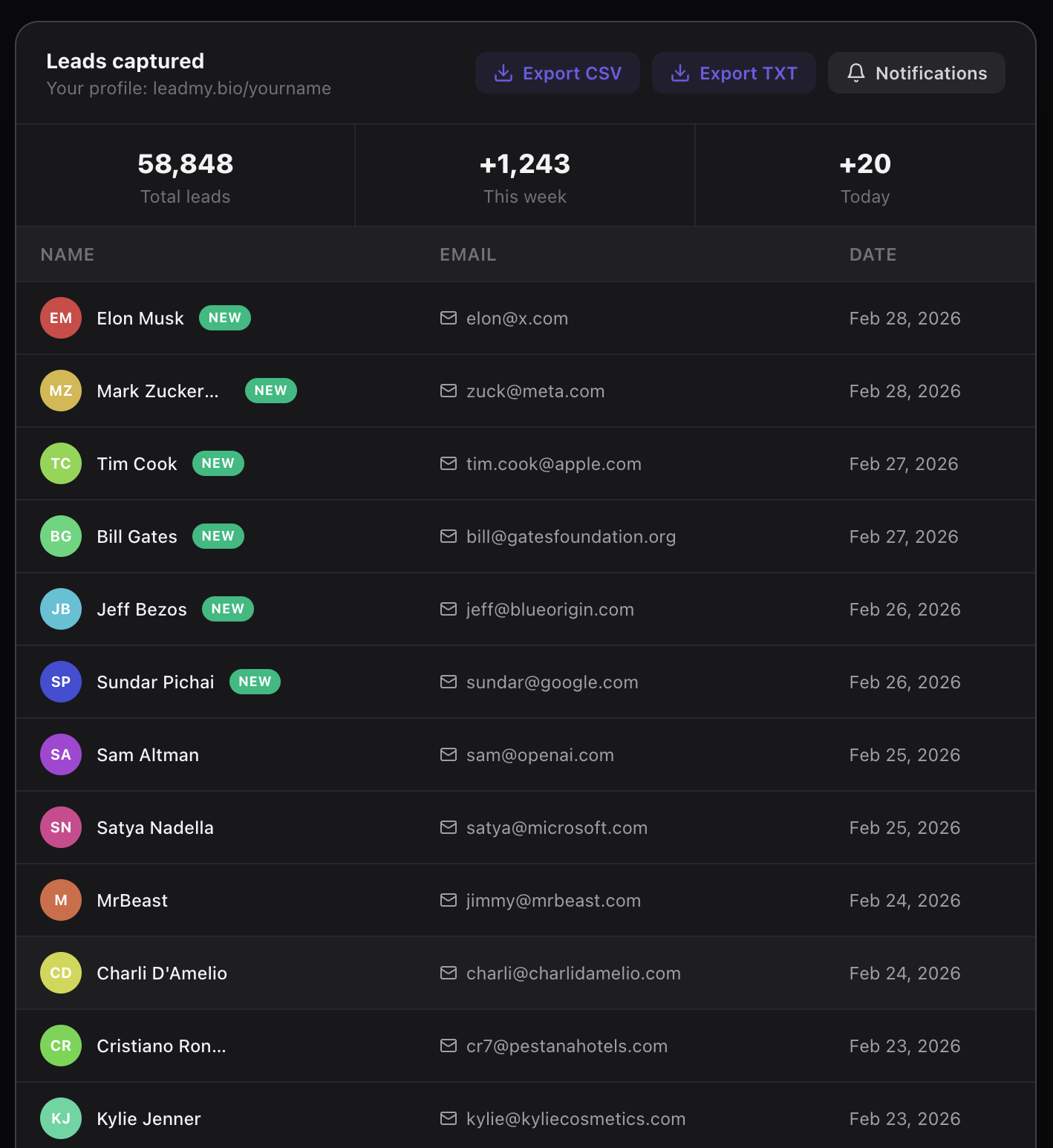
Step 1 — Replace your Instagram bio link with a LeadMyBio capture page. 90 seconds to set up. Every visitor from Instagram now passes through email/WhatsApp capture before reaching your destinations. Conversion runs 18-25% from click to verified contact.
Step 2 — Run capture campaigns through your existing reach. Don't wait for the algorithm to recover. Use the reach you have now. Post one Reel per week with explicit "DM 'GUIDE' to get the free PDF" prompts. Convert your existing audience into captured contacts before the reach drops further.
Step 3 — Set up a free email service (Brevo at 300 sends/day, or Beehiiv free tier). Build a 3-email welcome sequence. New captured emails enter the sequence automatically.
Step 4 — Send one broadcast email per week. Establishes the channel as a primary touchpoint. When court-ordered changes hit Instagram in Q3-Q4, your email is already a routine the audience expects.
Step 5 — Diversify content distribution beyond Instagram. Open accounts on Substack, Bluesky, Threads, and YouTube. Don't post heavily yet — just have the accounts ready. When Instagram's reach contracts further, you can pivot in days, not months.
Don't wait for the June 15 trial verdict to find out your reach is gone. Set up email and WhatsApp capture today at leadmy.bio/login. Free up to 1,000 leads. Court orders are coming. The captured list is the structural fix.
What Comes Beyond The June 15 Trial
Even if Meta wins the federal trial (unlikely given evidentiary record), the regulatory and litigation pipeline against social media companies for youth mental health harm extends well into 2027. The Australian social media ban for under-16s is being copied by other governments. The EU's Digital Services Act is increasing platform obligations. State attorneys general in 40+ US states are coordinating on consumer protection cases against Meta, TikTok, and YouTube simultaneously.
The trajectory is one-way: platforms become progressively more constrained in how aggressively they can recommend, distribute, and monetize content. Each new constraint compresses the reach available to creators.
The creators who built captured audiences in 2024-2025 are entering this period with structural protection. The creators who didn't are entering it exposed. The 38 days before June 15 is the last clean window to build the protection before the next reach-destroying change arrives.
Read also: Instagram repost penalty April 2026 discovery dead, Meta banned 600,000 accounts Instagram creators, and What happens if Instagram shuts down 2026.
FAQ
I'm not a mental health creator. Why does this affect me? Court-ordered algorithm changes apply platform-wide, not just to mental health content. When Meta is ordered to reduce algorithmic addictive patterns, the change affects Reels, Explore, recommendation surfaces, and feed ranking — for every creator. Lifestyle, fashion, fitness, gaming, comedy creators all see reach loss.
Will Meta really lose the June 15 trial? Bookmakers and legal analysts give Meta unfavorable odds. The internal documents already unsealed are damaging. The legal theory has won at multiple jury verdicts. The appellate path for Meta is narrow. Settlement before verdict is plausible but the operational remedies in any settlement will still be substantial.
How fast will algorithm changes take effect after a verdict? Initial product changes typically roll out 60-180 days after settlement or verdict. Full implementation of operational remedies takes 12-24 months. Creators see effects within Q3-Q4 2026.
Can I appeal if my reach drops because of a court order? No. Court-ordered changes apply uniformly. Individual creator complaints have no remedy. The structural protection is to maintain channels that don't depend on Meta's recommendation surface.
What about TikTok and YouTube? Both face parallel litigation. The LA jury verdict already includes Google liability. TikTok faces state AG investigations. The captured audience approach protects against algorithmic risk on all platforms simultaneously.
Is the email list really independent of Meta? Yes — email is delivered through SMTP servers operated by your email service provider, not Meta. WhatsApp broadcast lists deliver via the WhatsApp Business API but to opted-in recipients, with no algorithmic gate on delivery. Both survive any court order against Meta's product.
How much email list size do I need to matter for brand deals? Brands have started accepting email open rates as primary distribution metric in 2025-2026. A 10K subscriber list at 35% open rate (3,500 verified impressions per send) is increasingly being priced equivalently to ~50K Instagram followers in delivered reach. The list size needed is much smaller than follower count parity suggests.
The June 15 trial is 38 days from today. The verdict will reshape Instagram. Meta is already making preemptive product changes anticipating the ruling. Every creator on the platform will absorb the consequences. The email and WhatsApp lists are the only distribution channels that survive court-ordered changes intact. Build them now, before the verdict arrives, while you still have the reach to do so.
Sources:
- Meta's public nuisance case in New Mexico has billion-dollar consequences — CNBC
- Meta must face Instagram public nuisance case, Massachusetts high court says — Courthouse News Service
- Jury finds Meta and Google negligent in social media harms trial — NPR
- Meta Lawsuits — May 2026 Update — Social Media Victims
- Instagram Mental Health Lawsuit — King Law
- Meta Lawsuit: Facebook & Instagram — The Lanier Law Firm
- Meta's Zuckerberg pushes back on social media youth addiction claims — Al Jazeera
Ready to start capturing real leads?
Set up your LeadMyBio profile in 5 minutes. Free forever up to 1,000 leads.
Create your free profile →