Substack Is Exploding in 2026 — But Should You Own Your List or Rent It?
Substack's numbers in 2026 are impossible to ignore. Over 35 million active readers. More than 40,000 paid creators. Monthly subscription revenue across the platform exceeding $500 million. Dan Koe, Jay Clouse, Justin Welsh — the biggest names in the creator economy joined in 2025, and the momentum only accelerated into 2026.
If you're a creator and you haven't thought seriously about Substack yet, you're late to the conversation. But if you're thinking about Substack instead of building your own email list, there's something critical you need to understand first.
Substack and owning your email list are not the same thing. They're not even close.
Why Substack Is Growing So Fast in 2026
To understand the distinction, it helps to understand what's actually driving the Substack explosion.
The fundamental reason is platform fatigue. Creators who spent years building on Instagram, TikTok, Twitter, and YouTube watched their reach get throttled, their accounts suspended, their content suppressed by algorithms they don't control. The 2024–2025 TikTok ban scare in the US was the moment that crystallized it for millions of creators: you can lose everything overnight on a platform you don't own.
Substack offered something different. Email, direct to readers. No algorithm deciding whether your content gets shown. A clean reading experience. A subscription monetization model that doesn't require selling ads.
The platform also launched Notes — a micro-blogging feed that functions as a discovery layer inside Substack's own ecosystem. Writers can grow organically within Substack by getting recommended by other writers, appearing in the Notes feed, and building reputation in the platform's community.
For writers in particular — journalists, essayists, long-form thinkers — Substack in 2026 is genuinely excellent. The credibility signal of being on Substack carries real weight in certain niches. The built-in discovery is meaningful. The paid subscription flow works.
But.
What Substack Actually Is (And Isn't)
Here's the thing that most "join Substack" articles leave out: your Substack subscribers are Substack's subscribers first.
When someone subscribes to your Substack, they create a Substack account. Their email address is stored in Substack's database. Substack controls the deliverability, the sending infrastructure, the platform terms, and the relationship framework. You can export your list — Substack allows this, and credit to them for it — but the subscriber experience is fundamentally inside Substack's ecosystem, not yours.
This matters in several specific ways:
Discovery is controlled by Substack's algorithm. The Notes feed, the recommendation engine, the "Suggested for you" prompts — Substack decides who sees your content within the platform. Today, that algorithm is relatively creator-friendly. In three years? Unknown. Platforms change their algorithms. Always have, always will.
Your subscription revenue flows through Substack. The 10% take on paid subscriptions is Substack's business model. As your newsletter grows, that percentage becomes a significant revenue share you're paying to a third party. At $10,000/month in subscription revenue, you're sending $1,000/month to Substack. Every month.
Growth through Substack depends on Substack's ecosystem. If Substack's network declines — if another platform captures creator attention, if a policy change alienates writers, if the platform itself has financial trouble — your growth engine within that ecosystem declines with it.
None of this makes Substack a bad choice. It makes it a specific choice with specific tradeoffs that most of the hype articles don't explain clearly.
The Critical Difference: Platform Subscribers vs. Owned List
When you own an email list — truly own it, meaning you have a CSV of verified email addresses and nothing stops you from emailing those people tomorrow — you have an asset. A durable, portable, platform-independent asset.
Your list goes with you wherever you go. If you switch newsletter platforms from Beehiiv to Mailchimp to a self-hosted solution, your subscribers come with you. If a platform shuts down, your list survives. If a platform changes its terms, your list is unaffected. If a platform's algorithm deprioritizes your content, your list still receives your emails.
Substack gives you the ability to export — which is genuinely better than most platforms. But the default experience is building inside their ecosystem, with subscribers whose primary relationship is with Substack, not with you.
The distinction is subtle but meaningful: an email address you captured directly, that the person gave you through a signup on your own page or bio link, represents a fundamentally different relationship than a Substack subscriber who follows dozens of other writers and discovered you through Notes.
The Practical Question: What Are You Actually Building?
For most creators, the answer isn't Substack or an owned list. It's both, in the right sequence.
What Substack does well:
- Sending newsletters at scale with excellent deliverability
- Giving you discovery within its ecosystem (especially valuable if you're starting from zero)
- Paid subscription infrastructure with a smooth checkout
- Community and credibility in certain niches
What Substack doesn't solve:
- Capturing the social media followers you already have
- Converting bio link traffic into email subscribers
- Building a list that's independent of any single platform
That second list is where most creators with social media audiences have the biggest gap. You might have 20,000 Instagram followers and 5,000 TikTok followers. Those people already know you, already care about your content. Converting them to email subscribers should be your highest-leverage activity. Substack's native discovery tools don't help with that at all.
The Right Stack for 2026
The creators who are building most sustainably in 2026 are running a stack, not a single tool:
Capture → Send → Monetize
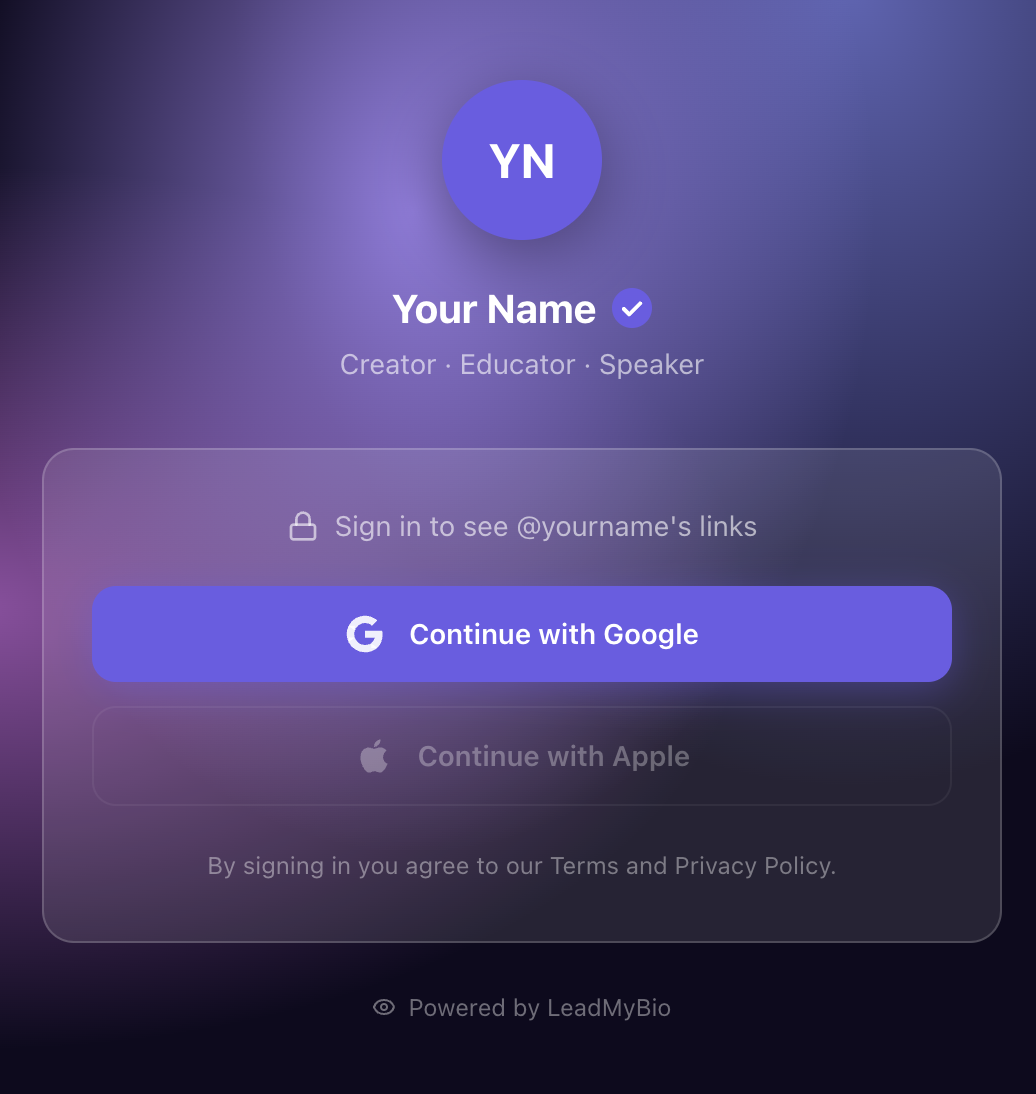
For capture: A tool that converts social media bio link traffic into verified email addresses. The best approach is one-tap Google login — visitors authenticate with Google, and their real, verified email is captured automatically. Conversion rates run 15–20% instead of the 2–5% you'd get from a standard form.
For sending and monetizing: Substack (if you're a writer who wants discovery and paid subscriptions), Beehiiv (if you want serious analytics and multiple revenue streams), or your own ESP setup (if you want full control).
The capture layer is what most creators are missing. They get on Substack and wait for organic discovery. Some of them succeed that way. Many more wait a long time with a small list.
The creators who grow fastest use their existing social audiences to seed their list, then Substack or Beehiiv to nurture and monetize it.
Substack Is Worth Using. Just Not as Your Only Strategy.
If you're a writer and Substack fits your niche — use it. It's genuinely good for what it does. The Notes feed gives you organic reach inside an engaged reading audience. The paid subscription mechanics work. The community is real.
But don't confuse "using Substack" with "owning your audience." They're different things. The first is using a tool. The second is building an asset.
An asset is what survives when a platform changes. An asset is what you can take with you. An asset is what makes your creator business durable regardless of what any single company decides to do next year.
Substack in 2026 is a great sending tool. It's a decent discovery tool. It's not a capturing tool, and it's not the same as owning your list.
Build both. Capture directly, send through whatever platform serves your audience best. That's the stack that lasts.
Start building your owned list today. LeadMyBio converts bio link visitors into verified email subscribers with one-tap Google login. Free forever up to 1,000 leads. No credit card required. Create your free profile →
Ready to start capturing real leads?
Set up your LeadMyBio profile in 5 minutes. Free forever up to 1,000 leads.
Create your free profile →