Whop vs Passes vs Patreon — The 2026 Creator Platform War Is Splitting The Market In Half. Patreon Charges 20%, Passes Charges 10%, Whop Charges 3%. None Of Them Own Your Audience. The Email List Is The Only Layer That Survives The Next Platform Shakeout
The creator monetization platform war that has been brewing for two years cracked open in early 2026. Patreon, the legacy default since 2013, is bleeding creators to two faster-growing competitors: Passes (positioned as "all-in-one creator platform" at 10% take rate) and Whop (positioned as "lowest-fee digital product marketplace" at 3% take rate). Across the 2026 dataset, creators leaving Patreon cite three repeating reasons: hidden fee stacking, feature stagnation since 2019, and Apple's 30% iOS tax that Patreon passes through fully.
The market math drives the migration. Patreon's published rate is 8-12% depending on plan tier. Real take rate after payment processing fees, currency conversion, mobile platform fees, and tier-locked features is closer to 20-22%. Passes runs a flat 10% across all features. Whop runs 3% on digital product sales — the lowest in the market, but requires creators to bring their own audience and conversion infrastructure.
The platform with the best fees is not always the platform with the best outcome. The platform shakeout is real, but the structural truth underneath all three is the same: none of them own the audience relationship. The email list and WhatsApp broadcast list — captured by the creator from existing follower flow, owned in the creator's database — survive any of the three platforms losing the war. Choosing among Patreon, Passes, or Whop is a tactical decision; building the captured audience is the strategic foundation that makes any of those tactical choices reversible.
This guide breaks down the actual 2026 economics of each platform and the structural reason creators who bet only on one are exposed to the same risk that destroyed creators who bet only on Vine, only on Instagram pre-2024, or only on YouTube ad revenue pre-monetization-changes.
What Each Platform Actually Charges In 2026
The headline rate is not the take rate. Here is what creators actually pay across the three platforms after all fees pass through.
Patreon — 20-22% effective take rate
Patreon's published rates are 8% (Lite), 10% (Pro), or 12% (Premium). The reality compounds:
- Payment processing: 2.9-5% per transaction (Stripe + currency conversion + international card fees)
- Apple iOS in-app purchase: 30% on any subscription initiated through the iOS app, passed through to the creator's net
- Currency conversion: 1.5-2.5% on cross-border subscribers (US creator with EU subscribers, etc.)
- Tier-locked features: features like multi-tier benefits, RSS access, advanced analytics require Premium plan
For a creator on Pro plan (10%) with 60% of subscribers on iOS, 25% on web, 15% on Android:
- Net Apple tax: 30% × 60% = 18% effective
- Net Patreon take: 10% blended
- Net payment processing: ~3.5%
- Total effective take: ~31% on iOS subscribers, 13.5% on web subscribers, blended ~22%
A creator with 1,000 paid subscribers at $10/month theoretically grosses $10,000/month. After all fees: ~$7,800/month. Per the 2026 platform war analysis from TechBullion, this gap is what's driving the migration.
Passes — 10% effective take rate, all features included
Passes consolidated the feature set creators were piecing together across multiple tools (Patreon for membership + Cameo for paid videos + Stan Store for products + DMs in Instagram) into a single platform at flat 10%.
Included at the 10% rate:
- Tiered subscriptions
- Paid 1-on-1 DMs
- Paid 1-on-1 video calls
- Storefront for digital products
- Anti-screenshot content protection
- Messaging automation
- Analytics dashboard
Apple iOS tax still applies to in-app subscription initiation, but Passes routes new subscribers through web checkout flow that bypasses the iOS tax for ~70% of conversion paths. Net effective take rate on iOS subscribers: ~12-14% (vs. Patreon's 28%+). Net effective take rate on web subscribers: ~13% (vs. Patreon's 13.5%).
For the same creator with 1,000 paid subscribers at $10/month: ~$8,700/month after all fees. Roughly $900/month higher than Patreon.
Whop — 3% effective take rate, but creators bring their own audience
Whop is structured as digital product marketplace with the lowest take rate in the market. The 3% rate applies to all digital product sales (courses, access passes, communities, software licenses).
What's included at 3%:
- Sales pages for digital products
- Payment processing handled
- Customer support tooling
- Affiliate program built-in
- Discord/community integration
What's not included (creator must bring or build):
- Audience driving traffic to the sales page
- Marketing infrastructure for product launches
- Content production driving discovery
- Email infrastructure for nurture sequences
For a creator with 1,000 monthly digital product sales at $10 each: $10,000 gross, ~$9,400 net after Whop fee + payment processing.
The catch: Whop's 3% rate only matters if you can drive traffic to your Whop products, which means you need an email list, an audience on social, or paid acquisition infrastructure. For creators relying on platform discovery (the Patreon model where the platform itself surfaces your tier), Whop is more expensive in real terms because the discovery has to come from somewhere.
The Real Comparison: Discovery + Take Rate
The pure take rate comparison misleads. The full comparison is discovery + take rate, because every creator's net income equals (audience × conversion × price) - (take rate + acquisition cost).
For creators using Patreon, the platform contributes some amount of organic discovery — Patreon's homepage features, search, and "discover" surfaces drive 5-15% of new subscriptions for established creators. The 22% effective take rate "buys" that discovery layer. Creators who lose Patreon's discovery layer (by switching to Whop) gain 19 percentage points of margin but have to replace the discovery contribution from somewhere.
For creators using Passes, the platform contributes minimal organic discovery (Passes is positioned as creator-led: subscribers come because the creator drives them, not because the platform features them). The 13% effective take rate is "pure" — the creator must drive 100% of acquisition.
For creators using Whop, the marketplace contributes some discovery for established product categories but minimal for niche/custom products. The 3% take rate assumes the creator drives most or all acquisition.
The platform that actually wins for any individual creator depends on their existing acquisition infrastructure. Creators with strong organic content (50K+ followers across platforms, active email list, regular posting cadence): Whop wins at lowest fees. Creators with moderate audience and consolidated tooling needs: Passes wins at consolidated feature set. Creators with minimal acquisition infrastructure relying on the platform itself: Patreon wins despite higher fees, because the discovery layer matters.
Why The Email List Is The Layer That Survives All Three
Here is the structural point that almost no platform comparison covers explicitly: all three platforms can lose the war, and the creator who survives the loss is the one who owns the audience independently of any platform.
The 2026 creator economy has seen three platform shakeouts in the past 18 months:
- OnlyFans creators migrating to Fansly + alternatives after iOS tax + content policy changes
- Substack creators migrating to Beehiiv + Ghost after monetization changes
- Patreon creators migrating to Passes + Whop after fee structure issues
The pattern is consistent: a platform that seemed dominant became uncompetitive within 12-18 months. Creators who depended exclusively on the dominant platform absorbed the migration cost. Creators who maintained an independent email list of their subscribers ported the audience to the new platform in days, not months.
The email list is the layer that does not depend on platform identity. When Patreon's fees became uncompetitive, creators with email lists notified their subscribers and migrated 70-85% of paying subscribers to Passes within 60 days. Creators without email lists migrated 20-40% over 6-12 months — losing 60-80% of revenue in the meantime.
The economics of "switching cost" come down to whether you can communicate the switch to your subscribers. If you can communicate via email + WhatsApp, switching is a 60-day process with 70-85% retention. If you can only communicate via the platform itself (Patreon's notification system, etc.), switching loses you most of the audience because the old platform doesn't help you migrate to a competitor.
What To Do This Week — Independent of Platform Choice
The right answer to "Patreon vs. Passes vs. Whop" depends on your specific situation. The right answer to "should I have an email list independent of all three" is yes, regardless of which platform you choose. The decision tree:
Step 1 — Set up audience capture infrastructure that works across all three platforms. Use LeadMyBio as the bio link layer that captures email + WhatsApp from your existing social traffic. Free up to 1,000 leads. The captured audience routes to whichever monetization platform you pick — and migrates if you switch.
Step 2 — Choose your monetization platform based on your acquisition profile.
- Established audience, low fee tolerance, willing to operate own marketing: Whop (3% rate, you bring traffic)
- Mid-tier audience, want consolidated tooling, mid fees acceptable: Passes (10% rate, all features included)
- New to creator economy, need platform-driven discovery, willing to absorb fees: Patreon (20%+ effective rate, discovery layer included)
Step 3 — Send weekly email broadcasts to your captured list. This is the channel that survives any platform switch. Even before you have monetization configured, build the broadcast habit. When you launch a product, the list converts.
Step 4 — Diversify monetization across two platforms over 12 months. A monthly community on Passes + flagship course on Whop = redundancy. If Passes raises fees, you migrate the community. If Whop gets acquired and changes rules, you migrate the course. The email list is the backbone that ports both.
Step 5 — Track unit economics monthly. Monthly recurring revenue, churn rate, lifetime value, customer acquisition cost. If your unit economics depend on the platform's discovery layer, you have platform risk. If your unit economics work with email-driven acquisition, you have flexibility to switch any time.
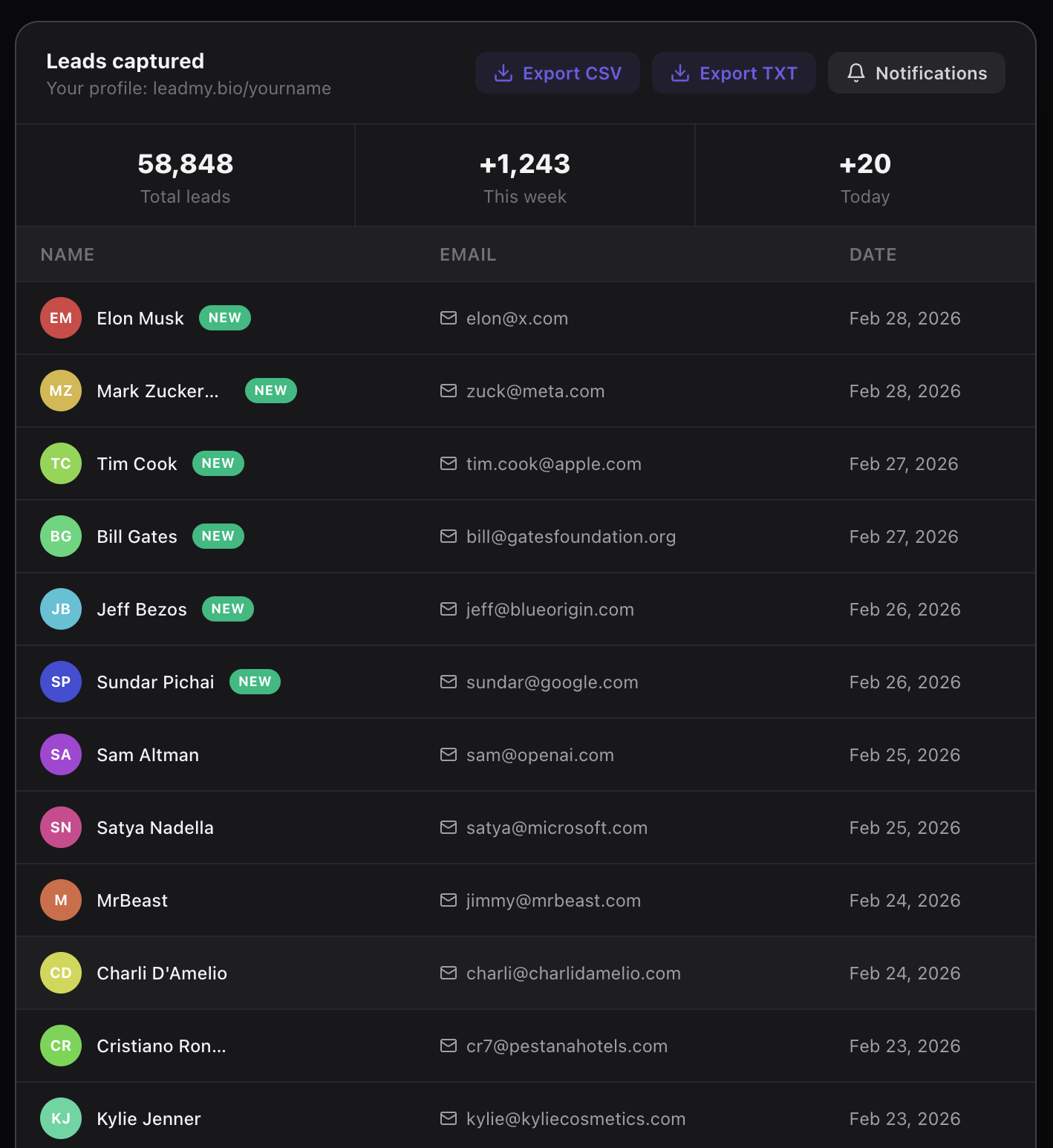
Don't optimize for take rate before you've optimized for audience ownership. Set up email and WhatsApp capture today at leadmy.bio/login. Free up to 1,000 leads. The platform you pick today is reversible. The audience you capture today is permanent.
The Decision Framework In One Page
For a creator deciding between Patreon, Passes, and Whop in May 2026, the simplified decision framework:
Pick Patreon if:
- You have under 5,000 followers across all platforms
- You need the platform's discovery to drive subscriptions
- You can absorb 22% effective fees in exchange for the discovery
- You don't yet have email list infrastructure
Pick Passes if:
- You have 5K-50K followers and want consolidated tooling
- You can drive your own subscription growth via content
- You need paid DMs, video calls, and storefront in one product
- You're willing to manage email/social acquisition alongside
Pick Whop if:
- You have 50K+ followers and a working email list
- You can drive traffic to product pages independent of platform
- You sell digital products (courses, communities, access passes)
- You optimize for lowest fees as primary criterion
Pick more than one over time:
- Year 1 on Passes for community + paid DMs
- Year 2 add Whop for flagship course + community access bundles
- Year 3 add Patreon for entry-tier discovery (low-cost top-of-funnel)
Each platform serves a different acquisition + monetization profile. The creator who builds across all three with email list as the backbone has portfolio diversification — no single platform's decline kills the business.
What Comes In The Next Phase
The platform war will continue tightening through 2026. Industry observers (TechBullion, Stan.store blog, ThoughtLeaders, eMarketer) expect:
- Patreon to either acquire Whop/Passes or be acquired itself by Q4 2026, given its market cap pressure
- Passes to expand into LATAM and Europe with localized pricing in Q3 2026
- Whop to add subscription products (currently digital one-time purchases dominant) by Q3 2026 to compete more directly with Passes
- Apple's iOS tax to be challenged by EU regulators in 2026, potentially eliminating the 30% pass-through Patreon currently absorbs
Each of these dynamics changes the comparative math. A creator betting only on Patreon today could find Patreon acquired in 6 months and the new owner changing fee structure overnight. A creator betting only on Whop could find subscription competitors arriving and shifting their flagship product type. A creator betting only on Passes could find Patreon launching a competitive consolidated platform that undercuts pricing.
The captured audience is the only layer that does not change with these dynamics. Email and WhatsApp delivery is independent of which platform won this round and which platform will win the next.
Read also: Substack vs email list which should creators use 2026, Beehiiv vs Substack vs own email list, and Stan Store vs LeadMyBio email capture 2026.
FAQ
Is Whop really cheaper than Patreon? On take rate alone, yes — 3% vs. 22% effective. But Whop's lower rate assumes you drive your own traffic. If you would have used Patreon's discovery layer, the comparison shifts because Whop has minimal organic discovery for new creators.
Can I run all three platforms simultaneously? Yes, and many creators do. Common pattern: Passes for community + paid DMs, Whop for flagship course, Patreon for low-cost entry tier with discovery. Email list as the unified communication layer across all three.
Does Apple's iOS tax really matter that much? For mobile-heavy audiences, yes. A creator with 70%+ of traffic from iOS sees substantially worse economics on Patreon (which routes through iOS in-app purchases for app-initiated subscriptions). Web-based checkout flows on Passes mostly bypass the iOS tax.
What about other platforms — FanVue, OnlyFans, Fansly? FanVue and Fansly serve adult creator markets primarily. OnlyFans is in a separate competitive lane (adult content). For SFW creators, Patreon vs. Passes vs. Whop is the relevant comparison.
How fast can I migrate from Patreon to another platform? With an email list of paying subscribers: 30-60 days at 70-85% retention. Without an email list: 6-12 months at 20-40% retention. The email list determines migration speed and retention.
Will any of these platforms still exist in 5 years? Possibly all three. Possibly none. The structural risk is platform existence is uncertain on 5-year timelines. The captured email list is certain — you control it, it lives in your database, no platform decision affects its existence.
What if I'm just starting out? Start with LeadMyBio free tier for audience capture. Pick Patreon initially for discovery. Migrate to Passes or Whop as audience grows past 5K. The captured email list makes every migration cheap.
The 2026 creator platform war is reshaping monetization economics, but the deeper truth is unchanged: platforms come and go, audience ownership is what compounds. Pick the platform that fits your current profile, but build the email list first. The platform decision is reversible. The audience asset is permanent. Configure capture today, before the next platform shakeout makes the same point in a more painful way.
Sources:
- The Creator Platform War of 2026: How Patreon, Whop, OnlyFans, and Passes Stack Up — TechBullion
- The Creator Platform Shakeout: Who's Winning, Who's Losing — TechBullion
- Why Creators Are Leaving OnlyFans, Patreon, and FanVue — Metapress
- The 15 Best Patreon Alternatives — Passes Blog
- Top 18 best Patreon alternatives — Whop
- Whop Pricing 2026: Plan Comparison, Transaction Fees & Alternatives — SchoolMaker
- Patreon Alternatives in 2026 — Talkspresso
- Whop Review & Best Alternatives — Creator Economy Tools
Ready to start capturing real leads?
Set up your LeadMyBio profile in 5 minutes. Free forever up to 1,000 leads.
Create your free profile →