Meta Just Built Hatch — The OpenClaw-Inspired AI Shopping Agent For Instagram — And Every Creator Earning From IG Shop Just Got A New Algorithmic Middleman That Decides Who Buys What. The Email List Is The Only Way Out
On May 8, 2026, Dataconomy reported that Meta is building Hatch — an AI shopping agent inspired by Anthropic's OpenClaw, designed to power Instagram and Reels commerce experiences. The same day, eMarketer's coverage of Meta's AI shopping agents framed Hatch as Meta's strategic answer to TikTok Shop's accelerating growth and an attempt to give Instagram users a more streamlined path from Reel discovery to purchase completion.
For consumers, Hatch is positioned as helpful: see something in a Reel, ask the AI, get product matches and one-tap purchase. For Meta, Hatch is the next layer of platform monetization — the AI agent participates in every commerce transaction on Instagram, generating attribution data, ad targeting signals, and affiliate-fee revenue.
For creators selling on Instagram — through IG Shop, product tags, affiliate links, brand deals routed through Reels, or direct DM-based sales — Hatch is something else entirely: a new algorithmic intermediary between the creator's content and the consumer's purchase decision. The creator no longer drives the purchase narrative; the AI agent does. The creator's product link no longer competes on direct merit; it competes against Hatch's recommendation. The creator's relationship with the buyer no longer happens in the Reel comments or DMs; it happens through Meta's AI broker.
The structural truth that lands on every Instagram-selling creator on May 9, 2026: Meta just inserted itself as the dealmaker between you and your buyer. The email list and direct WhatsApp commerce are the only channels that bypass the agent. Everything that goes through Instagram now flows through Hatch. Here is what Hatch actually does, why it changes creator economics, and the tactical playbook before the rollout reaches mass scale.
What Hatch Actually Does Inside Instagram
Per the May 8 reporting, Hatch is being built as a multi-modal AI shopping agent integrated across Instagram's commerce surfaces:
Reels integration. Users watching Reels can invoke Hatch to ask questions about products visible in the video. "What's that lipstick?" "Where is that sweater from?" "Show me similar products in my size." Hatch returns matched products from IG Shop catalog with one-tap purchase.
Search integration. Instagram search queries with shopping intent ("white linen dress summer," "midcentury floor lamp") route to Hatch instead of the existing post-based search. Hatch returns curated shopping recommendations with attribution to the underlying products and creators.
DM integration. Hatch can be invoked in DM conversations between users to recommend products, compare options, and complete purchases without leaving the chat. This is where the agent gets most strategic for Meta — it transforms private DM commerce conversations from creator-to-buyer relationships into Meta-mediated transactions.
Profile integration. Visiting a creator's profile that has IG Shop set up surfaces Hatch as a recommended assistant for browsing the creator's products and recommending matches based on user history.
Cross-platform integration (planned). Per the eMarketer reporting, Hatch is being designed for eventual cross-platform use across Meta properties — Instagram, Facebook, Threads, WhatsApp Business — meaning a single AI shopping agent operating across the entire Meta ecosystem.
The agent is reportedly deeply inspired by Anthropic's OpenClaw, which itself has been the dominant AI agent platform of 2026. Meta's positioning is that they need their own agent because routing Instagram commerce through Anthropic's infrastructure would give Anthropic too much leverage over Meta's primary monetization layer. Hatch is Meta's bet on owning the AI commerce layer.
Why Hatch Changes Creator Economics On Instagram
The conventional Instagram commerce model that creators built businesses around in 2022-2025 worked like this:
- Creator posts a Reel featuring a product
- Caption + product tag + bio link drive viewers to either (a) the product page directly, (b) the creator's IG Shop, or (c) an external affiliate link
- Viewer makes purchase decision based on creator's pitch, comments from other buyers, and direct product information
- Creator earns through IG Shop sales, affiliate commission, brand deal payment, or direct revenue from owned products
The Hatch-mediated commerce model works differently:
- Creator posts a Reel featuring a product
- Viewer invokes Hatch to ask about the product
- Hatch returns: (a) the exact product in the Reel, but ALSO (b) competing products in IG Shop catalog that Hatch recommends as alternatives, (c) lower-priced equivalents, (d) products from creators with stronger Meta-side signals (verified, IG Shop priority, paid placement)
- Viewer's purchase decision is shaped by Hatch's curation, not by the creator's direct pitch
The competitive dynamics shift in three ways:
1. The creator is no longer the primary recommendation engine. Pre-Hatch, the creator's enthusiasm + audience trust + direct narrative drove the purchase. Post-Hatch, the AI's curation drives the purchase. The creator's product becomes one option Hatch presents, weighted by Meta's algorithmic signals (which favor creators paying for IG Shop priority, verified accounts, and creators participating in Meta's monetization programs).
2. Affiliate revenue gets restructured. Existing creator-affiliate relationships through Amazon, ShopMy, LTK, and direct brand affiliate programs assume the click goes from the creator's content directly to the affiliate's checkout. Hatch insertion routes through Meta's commerce infrastructure first, which means Meta likely takes attribution and fee share. Per industry analysis, Meta's expected take rate on Hatch-mediated commerce is 5-15% of transaction value.
3. Product discovery is decoupled from creator personality. Pre-Hatch, "I saw this on Sarah's Reel" drove discovery. Post-Hatch, "I asked Hatch and it recommended this" drives discovery. The creator becomes a discovery initiator, not a discovery completer. Brand sponsorship rates that depend on creator-as-purchase-driver re-rate downward over 12-24 months.
The structural shift: Instagram commerce is being intermediated by an AI agent owned by Meta, monetized by Meta, and trained on signals that Meta controls. Creators continue to participate, but on terms set by the agent.
Why The Email List Is The Only Channel That Bypasses Hatch
The structural escape from Hatch intermediation is straightforward but requires intent: the email list and the WhatsApp broadcast list are direct channels between creator and buyer that do not route through Meta's commerce infrastructure.
When the creator sends an email to their captured list with a product offer, the link goes directly from the email to the creator's owned checkout (Shopify, Stripe, Whop, Passes, or any direct sales infrastructure). Hatch does not insert. Meta does not take attribution share. The creator captures 100% of the transaction economics minus the standard payment processor fee.
When the creator messages their captured WhatsApp list with a product offer, the same thing happens. WhatsApp is owned by Meta, but the broadcast list is creator-controlled and the click-out goes to creator-owned checkout, not Meta-mediated commerce.
The economics of the bypass:
Hatch-mediated transaction (representative):
- Buyer sees Reel
- Buyer asks Hatch
- Hatch routes to checkout, takes 5-15% intermediation fee
- Creator earns 50-65% of transaction (after Meta fee + payment processor + affiliate platform if applicable)
Email-driven direct transaction:
- Buyer is on creator's email list
- Creator sends email with direct link
- Buyer clicks to creator's owned checkout
- Creator earns 92-97% of transaction (after payment processor only)
For the same gross transaction value, email-driven commerce delivers 1.5-2x the creator margin. For creators selling at meaningful volume ($5K-$50K/month in Instagram commerce), the difference compounds to $50K-$500K+ per year in retained margin.
The Specific Tactical Playbook For May-July 2026
For creators selling on Instagram before Hatch reaches full rollout, the three-month playbook to migrate the highest-value buyers off Hatch-mediated commerce:
Month 1 (May 2026): Build the capture funnel. Use LeadMyBio as the bio link layer that captures email + WhatsApp from your existing Instagram traffic. Free up to 1,000 leads. Configure the lead magnet to be product-relevant: if you sell beauty products, offer a "free skincare quiz." If you sell fitness products, offer a "free training plan." If you sell digital products, offer a "free guide." The lead magnet matches the future commerce intent.
Month 2 (June 2026): Migrate top buyers. Identify your top-buying customers from existing Instagram commerce data. Send them a direct outreach (DM or email if you have it) inviting them to join your direct list with an exclusive offer. Goal: convert your top 5-10% of buyers into email-list subscribers before Hatch reaches them. These are the buyers worth $30-200 each in lifetime value.
Month 3 (July 2026): Launch first email-driven product. Send an exclusive product offer to your captured list. Either a new product, an early access to existing product, or a pricing advantage. The conversion rate on a warmed email list to a relevant product offer is 5-15% — significantly higher than Hatch-mediated discovery rates which are typically 0.5-2%.
By August 2026, when Hatch is in full rollout, you have a parallel commerce channel that doesn't depend on Hatch's curation, doesn't pay Meta's intermediation fee, and doesn't lose attribution to the AI agent. The Instagram commerce continues, but you've added a higher-margin direct channel that you fully own.
Why The Timing Window Matters
Hatch is in active development as of May 8 reporting. Industry sources suggest beta rollout in Q3 2026 (July-September), broader rollout in Q4 2026 (October-December), and full deployment by Q1 2027. The window where Instagram commerce still works on the pre-Hatch model is May-September 2026 — roughly four months.
During the window:
- Bio link clicks still drive directly to creator-controlled destinations
- IG Shop competition is still primarily organic-discovery driven
- Affiliate links still resolve directly to affiliate checkouts
- DM-based commerce conversations are still creator-to-buyer
After Q3 2026, gradually:
- Hatch begins inserting into shopping queries
- IG Shop algorithmic ranking incorporates Hatch signals
- Affiliate links may route through Meta commerce infrastructure
- DM-based commerce gains AI-mediated suggestions
The window for moving high-value buyers off Hatch-dependent infrastructure is now. Creators who build email + WhatsApp capture during May-September 2026 enter the Hatch era with a parallel channel. Creators who don't enter the Hatch era fully dependent on whatever margin Meta leaves on the table.
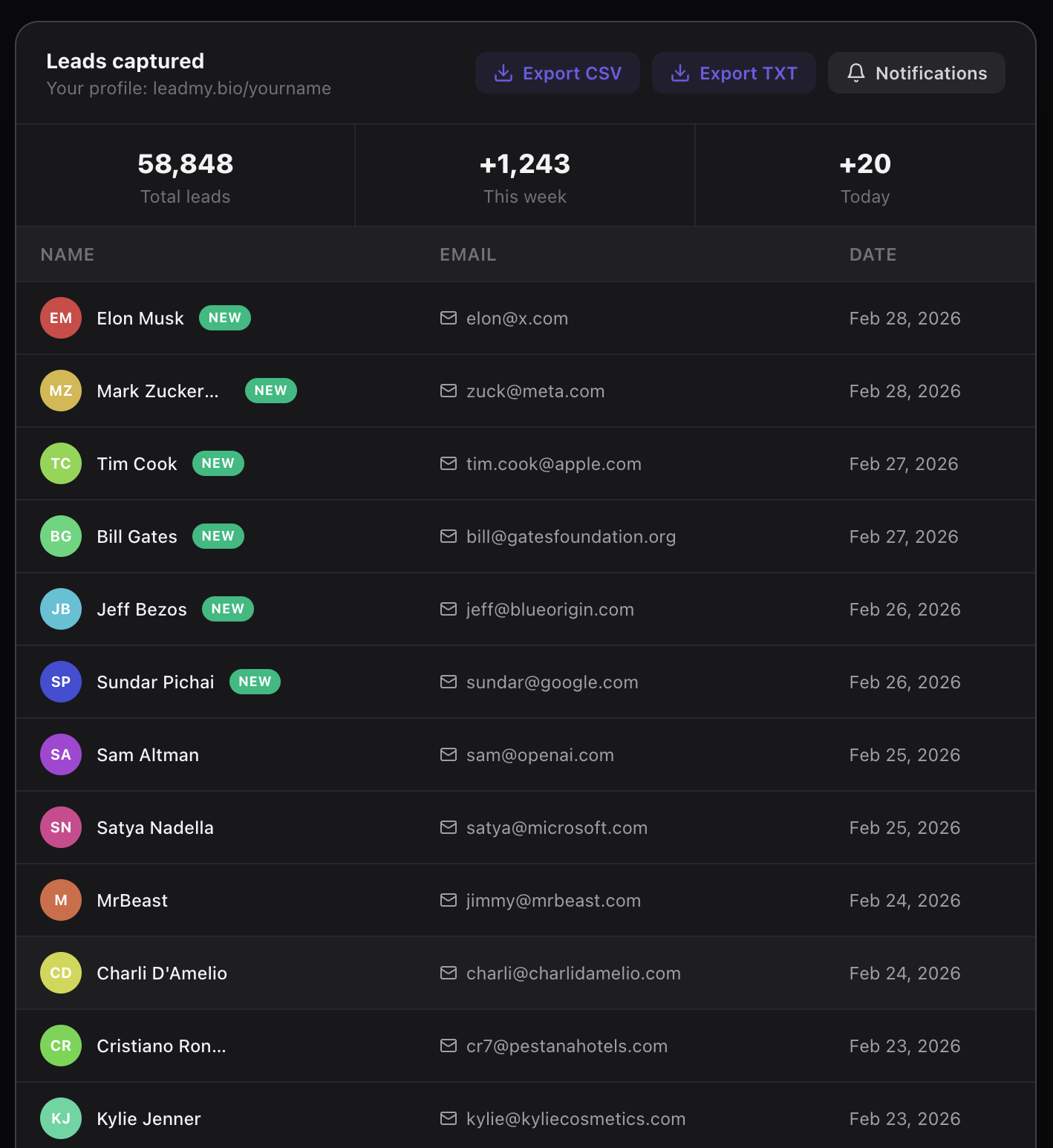
Don't wait for Hatch to start taking your transaction margin. Set up email and WhatsApp capture today at leadmy.bio/login. Free up to 1,000 leads. The window before Hatch full rollout is May-September 2026. Your direct commerce channel needs to be live before then.
What This Means For Different Creator Types
The Hatch impact varies by creator monetization type:
Beauty/fashion/lifestyle creators with IG Shop: Highest impact. Hatch directly competes for the recommendation in the most-shopped categories. The creator's product gets placed alongside competing products with Meta's curation logic. Email list migration is highest priority.
Affiliate creators (Amazon, ShopMy, LTK): Moderate to high impact, depending on how Meta integrates affiliate platforms with Hatch. If Hatch routes affiliate clicks through Meta first, attribution and revenue share shifts. Email list with direct affiliate links bypasses entirely.
Course/digital product creators: Lower direct impact (Hatch is shopping-focused, not knowledge-product focused), but indirect impact through reduced organic Instagram discovery as Hatch consumes shopping-intent searches. Email list remains the primary monetization channel.
Brand-deal creators: Indirect impact. Brand sponsors will increasingly require creators to operate within Hatch-compatible commerce flows. The brand-deal economics shift as Meta captures more of the commerce attribution. Creators with email lists negotiate better deal terms because they offer brands direct attribution outside Meta's framework.
Adult creators on IG-adjacent funnels: Hatch will likely enforce Meta's content policies more aggressively, making IG-to-OnlyFans/Fansly traffic harder to route. Email and WhatsApp become essential for any traffic that needs to bypass Meta's commerce policy filters. Per the analysis of email lists as platform-loss insurance for adult creators, this category has the highest urgency.
The Anthropic OpenClaw Connection
The Dataconomy reporting specifically frames Hatch as "OpenClaw-inspired." This matters strategically. OpenClaw, Anthropic's flagship agent platform, has set the architecture for AI agents performing real-world tasks (including commerce, browsing, and tool use) since its launch in late 2025. By mid-2026, OpenClaw is the dominant agent infrastructure used by enterprises, developers, and increasingly consumer-facing products.
Meta's strategic choice is "build vs. buy vs. partner." Building Hatch in-house, OpenClaw-inspired, indicates Meta wanted:
- Architectural compatibility with the dominant agent paradigm (so users find Hatch behaving like OpenClaw)
- Independence from Anthropic infrastructure (so commerce monetization stays with Meta)
- Control over training signals (Meta's commerce data, ads data, user behavior data)
The implication for creators: Hatch will behave similarly to other AI agents users are familiar with from OpenClaw experiences. Recommendations will be conversational, context-aware, and increasingly accurate over time. The agent will get better at converting shopping intent into purchases. The creator who relies on the pre-AI organic-discovery model will see steady erosion as agent-mediated commerce captures more share of total Instagram commerce.
What To Do This Week
For creators selling on Instagram, the May 9 action list:
1. Audit your current Instagram commerce flow. Where does revenue come from? IG Shop, affiliate links, brand deals, DM-based sales, bio link to external checkout? Each flow has different Hatch exposure. Map your top three revenue paths.
2. Set up LeadMyBio email + WhatsApp capture. Free up to 1,000 leads. Configure the bio link to capture before the bio link sends to commerce. Goal: every commerce-intent visitor first becomes an email/WhatsApp subscriber.
3. Pre-write the migration email sequence. When Hatch starts inserting into your buyer flow, you'll want to redirect your highest-value buyers to your owned channels. Pre-write 3 emails: introduction to the email list, exclusive offer, ongoing value. Send them as your subscribers grow.
4. Identify your "exclusive list" anchor product. A digital product, course, community, or service that's email-list-only and not on IG Shop. This is the tangible value that justifies subscribing to your list and migrating spending off Hatch-mediated commerce.
5. Track post-Hatch metrics monthly from August onward. As Hatch rolls out, watch your IG Shop conversion rate, affiliate click-through rate, and direct-sales rate. The metrics that decline are signaling Hatch capture; the metrics that hold are signaling email-driven bypass success.
The Hatch rollout is a 6-9 month change in Instagram's commerce structure. Creators who treat it as urgent in May-July 2026 enter Q4 with parallel infrastructure. Creators who treat it as Q4 problem enter Q4 already losing margin to Meta's new middleman.
Read also: Whop vs Passes vs Patreon — 2026 platform war email list, Meta Creator Fast Track 2026 — the Facebook trap, and AI agents creators lead capture 2026.
FAQ
Will Hatch be opt-in for creators, or will it apply to all Instagram commerce? Per current reporting, Hatch will be deployed as a default feature for all Instagram users with shopping behaviors, not opt-in. Creators with IG Shop set up will be included in Hatch's recommendation pool by default.
Can I prevent Hatch from recommending competing products on my Reels? No. Meta's recommendation logic is platform-controlled. The creator can post products and have them appear in Hatch's catalog, but cannot exclude competing products from being recommended alongside.
Will Hatch take a cut of my IG Shop sales? Likely yes. Meta has not announced specific take rates, but industry analysis estimates 5-15% intermediation fee on Hatch-mediated transactions. This is on top of Meta's existing IG Shop fees.
How is this different from Instagram's existing recommendation algorithm? Existing recommendations surface posts; Hatch directly intermediates purchases. The difference is that Hatch participates in the transaction itself — taking fees, capturing data, owning the customer relationship — not just routing discovery.
Should I leave Instagram commerce entirely? No, but reduce dependency. Instagram commerce will still drive volume, especially for creators with strong IG audiences. The strategy is "Instagram + email list" — keep the volume, build the email list as the higher-margin parallel channel.
Will this affect TikTok Shop and YouTube Shopping similarly? TikTok and YouTube are racing to build their own AI agents (TikTok's "AI Imagine" and similar, YouTube's "Shopping AI"). The structural shift to AI-agent-mediated commerce is happening across all major platforms in 2026-2027.
Can I use AI agents to my advantage as a creator? Yes — using AI agents for content optimization, audience research, and direct customer service. The trap is letting AI agents intermediate your transactions; the opportunity is using AI agents in your owned workflow.
The Hatch announcement is the next chapter in platform commerce intermediation. Meta is building the AI broker that sits between creators and buyers on Instagram. The fee, the attribution, and the customer relationship increasingly flow to Meta. The creators who survive the shift are the ones who build direct channels — email, WhatsApp, owned checkout — that do not route through the AI middleman. The window for setup is May-September 2026. Configure the bypass infrastructure today, before Hatch starts taking the cut.
Sources:
- Meta Builds OpenClaw-inspired Assistant For Instagram — Dataconomy
- Meta readies AI shopping agents for Instagram to rival TikTok Shop — eMarketer
- Social Media Today daily news
- TikTok updates May 2026 — SocialBee
- Meta Facebook updates May 2026 — SocialBee
- Creator Economy Trends 2026 — Stan Store
- Influence Trends 2026 — Ogilvy
- Creator Economy Trends to Watch in 2026 — eMarketer
Ready to start capturing real leads?
Set up your LeadMyBio profile in 5 minutes. Free forever up to 1,000 leads.
Create your free profile →